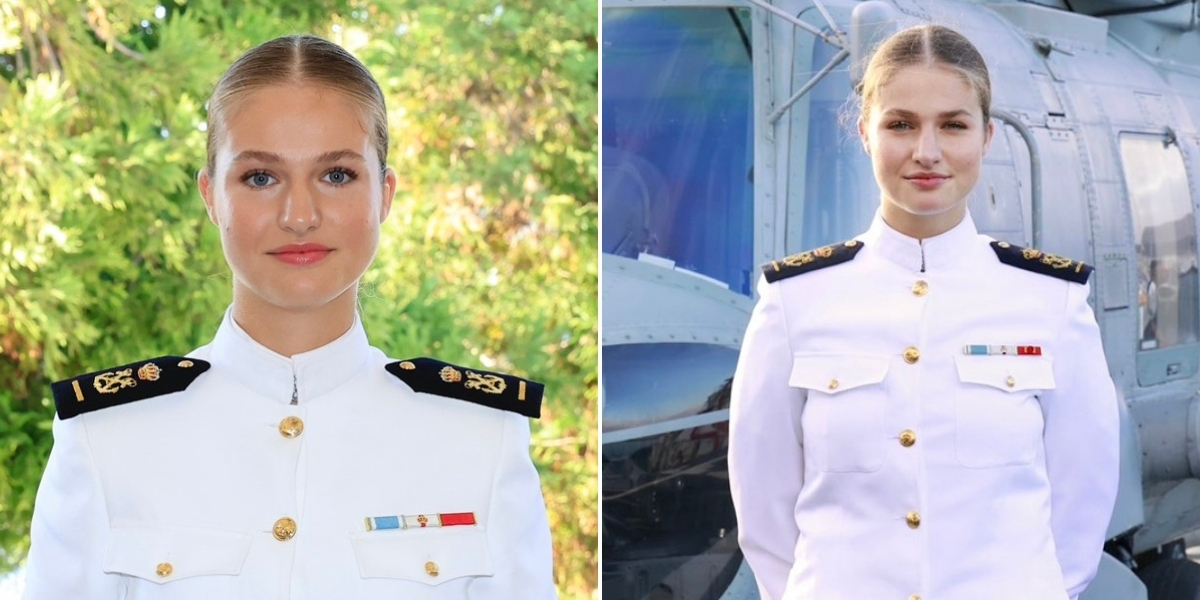
At just 19 years old, Leonor, Princess of Asturias, is already making history. Born into one of Europe’s oldest monarchies, she carries the weight of centuries of tradition — and the promise of something entirely new. As Spain’s crown princess, Leonor stands on the brink of a rare moment: if she ascends the throne, she will become the country’s first reigning queen in nearly 150 years.

But Leonor’s life isn’t all pomp and ceremony. While most teenagers her age are focused on university, social lives, or first jobs, she is immersed in rigorous military training — a long-standing tradition for Spanish heirs. It’s more than a symbolic gesture; it is meant to instill discipline, leadership, and a sense of service, preparing her for the very real responsibilities that come with ruling a nation. For Leonor, the future isn’t just about titles and appearances. It’s about preparing to serve a country with dedication and focus.

Spain hasn’t seen a woman rule in her own right since Queen Isabella II in the 19th century. Since then, queens have been companions to kings, their roles largely ceremonial or supportive. Leonor’s potential ascension represents a shift not only in gender but in generational thinking — a modern heir ready to carry an ancient monarchy into a new era.
Raised in a Spain that values democracy, equality, and progress, Leonor embodies a delicate balance: the traditions of royalty intertwined with the expectations of modern society. She’s not queen yet, but every step she takes — every uniform worn, every duty learned — is a reminder that history is already watching.

For a young woman standing on the edge of a historic milestone, the question isn’t just whether she will wear the crown, but what kind of queen she will become. And for Spain, it could mark the beginning of a new chapter in a story written over centuries.