I knew I was different from a very young age. I could feel it written across my face, woven into my words, and tangled in my voice. Different.
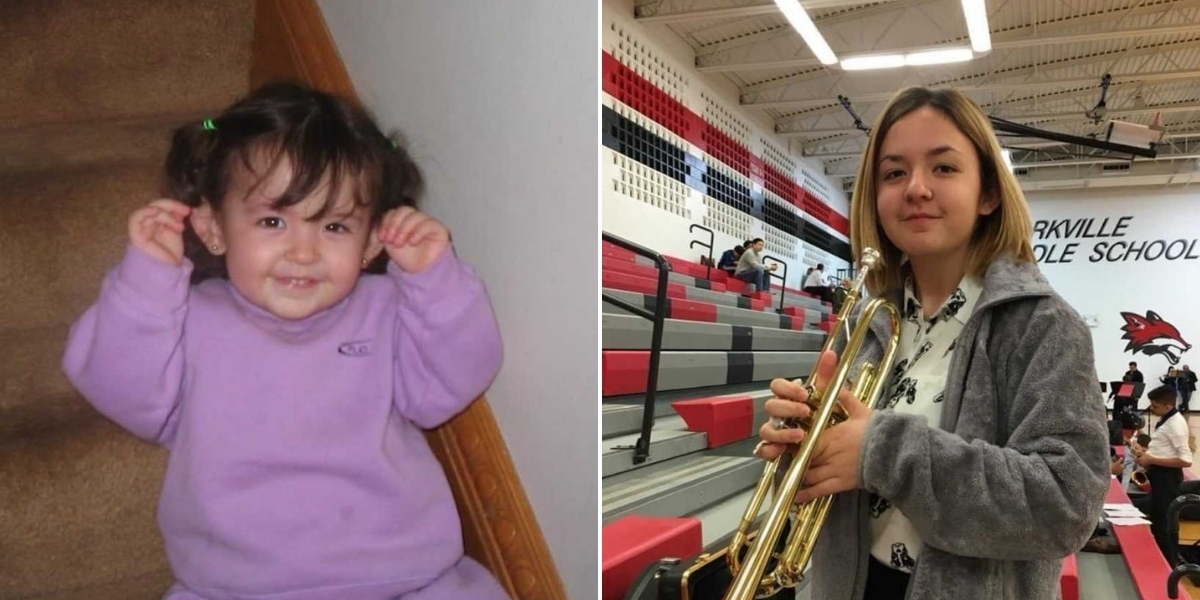
As a toddler, I seemed like a “good” kid. I played independently, I was cheerful, and I hit almost all of my milestones early. I wasn’t fussy about food, and I talked—endlessly. I tried everything the local college offered: ballet, tap dancing, swimming, gymnastics, tumbling. On the surface, I seemed like a well-rounded, thriving child.
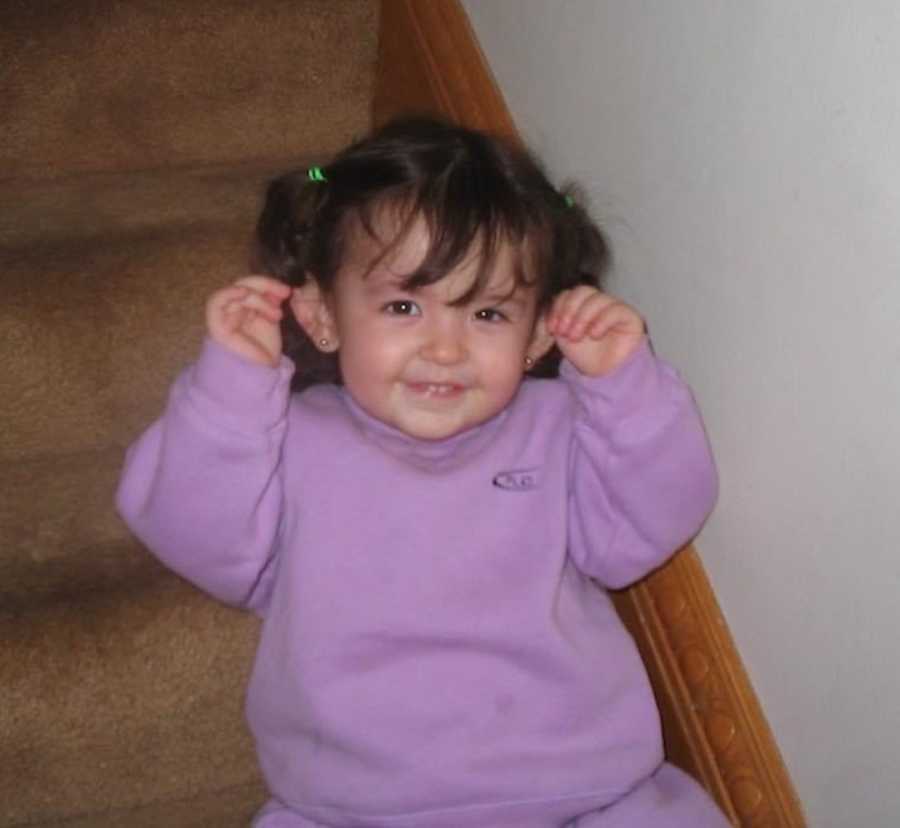
But beneath that exterior, I was struggling. I had severe separation anxiety and a heightened sensitivity to the world around me. I couldn’t sit through a single class without panic or tears. I needed my parents close at all times. Loud noises, crowded rooms, bright lights, and overwhelming sensations could trigger full-blown meltdowns. It felt like I was living a double life—fearless and eager to experience the world on one hand, yet plagued by anxiety and fear on the other. I was terrified of being alone, of sounds, of anything that stirred strong feelings inside me. And as I grew, that anxiety grew with me.
By first grade, my dad had to sit in class with me. Slowly, over the next few years, I became more independent. By age nine, I had outgrown my separation anxiety, but the constant upheaval of moving back and forth between Turkey and the U.S. left deep scars. I developed PTSD, haunted by memories that refused to fade, nightmares that reminded me of trauma long after it had passed.
School became a struggle. From fourth grade through middle school, I avoided classes and withdrew more and more. When I entered my teenage years, depression hit. I felt everything and nothing at the same time. The world was overwhelmingly loud and bright, yet I sank into my own darkness and silence. Unhealthy coping mechanisms led me to my first inpatient mental health hospitalization at fourteen. That was the beginning of a long, grueling path of SSRIs, SNRIs, mood stabilizers, and antipsychotics. I tried psychiatrist after psychiatrist. Most of them failed to help. One even told me outright that they couldn’t. At the time, no one realized why I was so difficult to treat—I had autism spectrum disorder, and everything else seemed like noise around the central truth of who I was.
By sixteen, I carried a heavy load of diagnoses: Generalized Anxiety Disorder, Major Depressive Disorder, Obsessive-Compulsive Disorder, Anorexia Nervosa, Avoidant/Restrictive Food Intake Disorder, and Somatic Symptom Disorder. And just when it seemed like enough, the COVID-19 pandemic hit.
In June 2020, I developed sudden tics—blinking rapidly, jerking my head, losing control over my body. Panic set in immediately. I was convinced I had a brain tumor or a progressive disease. The ER diagnosed dystonia and even suggested I had been misusing my grandmother’s medications. But anyone could see these were tics, not dystonic movements—I was mouthing words, blinking, and contorting my face in patterns consistent with tic disorders. The ER visit only heightened my fear.
I began researching obsessively. Hours turned into days as I studied every movement disorder I could find. Eventually, with my neurologist ruling out tumors, Parkinson’s, Huntington’s, and autoimmune illnesses, it became clear: I had a tic disorder. Simple, yet my curiosity demanded answers: Why me?
Therapists insisted my tics were “anxious,” even as they evolved into coprolalia, copraxia, and echolalia. I was hitting myself, shouting, swearing. Anxiety couldn’t explain this. Eventually, my tics became what I now recognize as Tourette’s, a neurological condition—and a part of my neurodiversity.
During this time, I requested psychological testing to understand the root of my tics. My research suggested autism and ADHD were likely, yet the psychologist refused to test for either, diagnosing me instead with Somatic Symptom Disorder. Frustration mounted, until my primary care physician, after reviewing my folder of research, said simply: “I’m just gonna put that in now.” He diagnosed me with autism. Relief washed over me in a way I had never experienced—someone finally saw me, truly.
Even with validation, uncertainty lingered. People told me, “You may just be like that. It doesn’t mean autism.” I had to remind myself that autism is a spectrum; it isn’t defined by stereotypes or media portrayals. For me, it looks like difficulty processing social concepts, discomfort with eye contact, and a constant balancing act between solitude and connection. Each day is a discovery of what I like, what overwhelms me, and how I navigate the world.
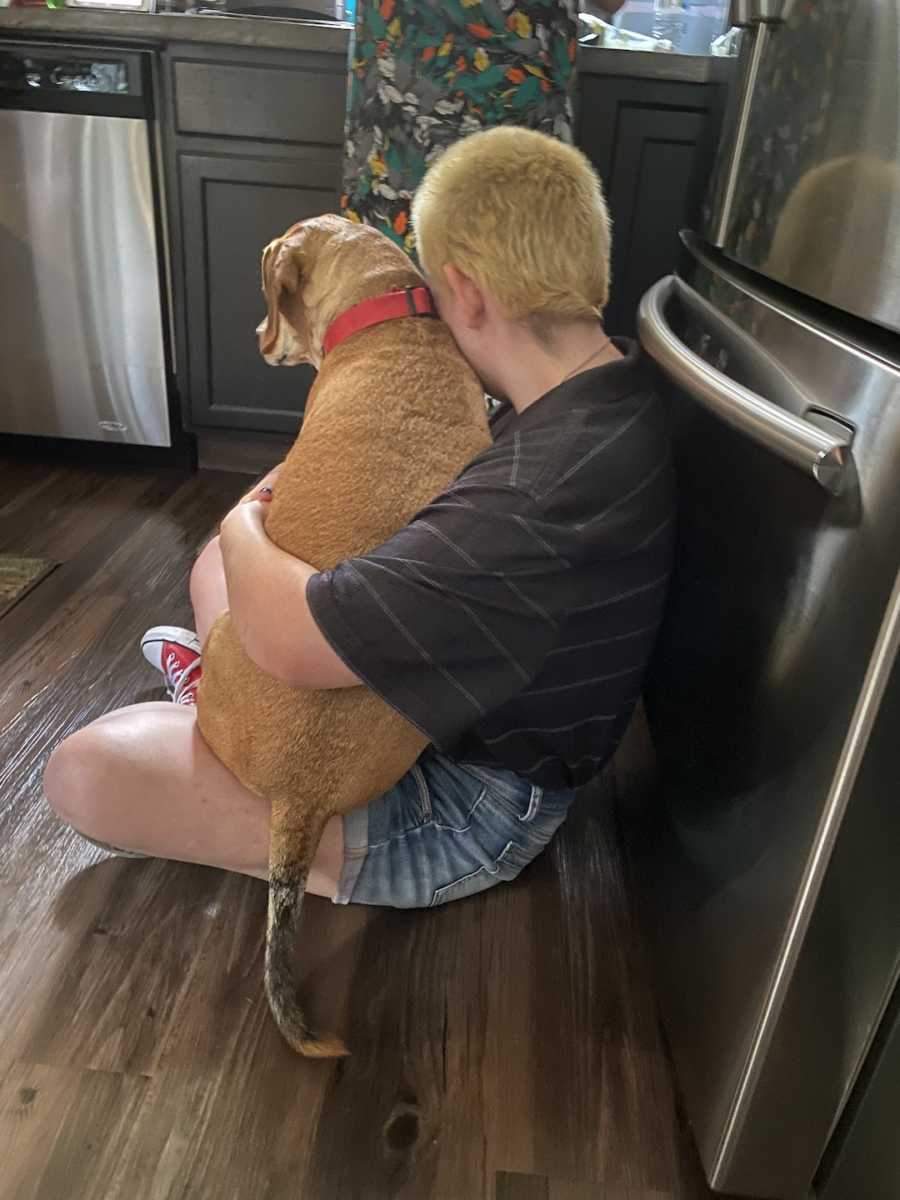
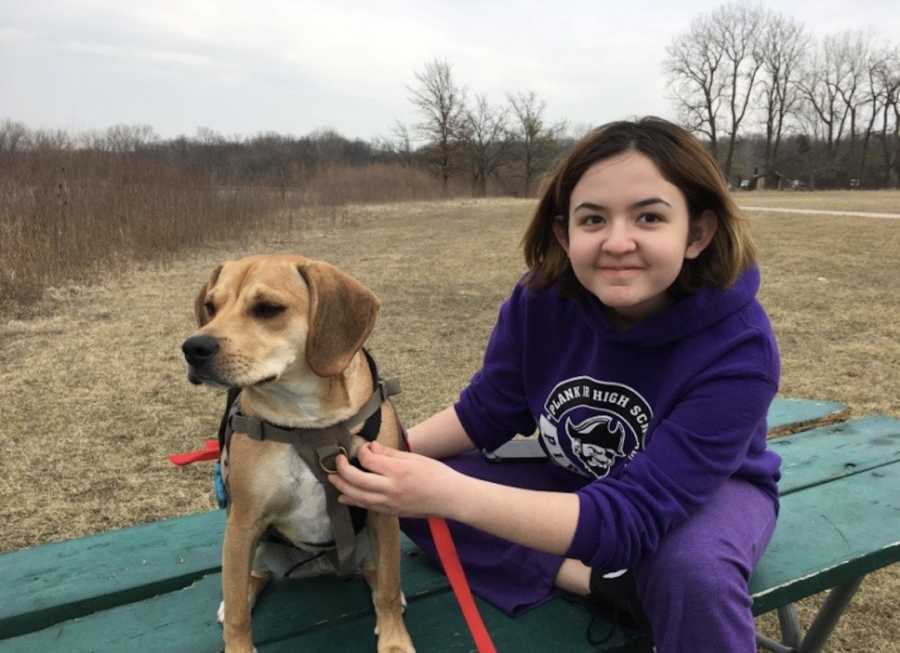
A cornerstone of my life has been the connection I share with my dogs, Peanut and Ivy. Peanut, my psychiatric service dog, and Ivy, my grandparent’s diabetic service dog in training, have been by my side since puppyhood. They sense my panic, stay with me during meltdowns, offer deep pressure, tactile comfort, and unspoken companionship. Animals understand me in ways humans often cannot.
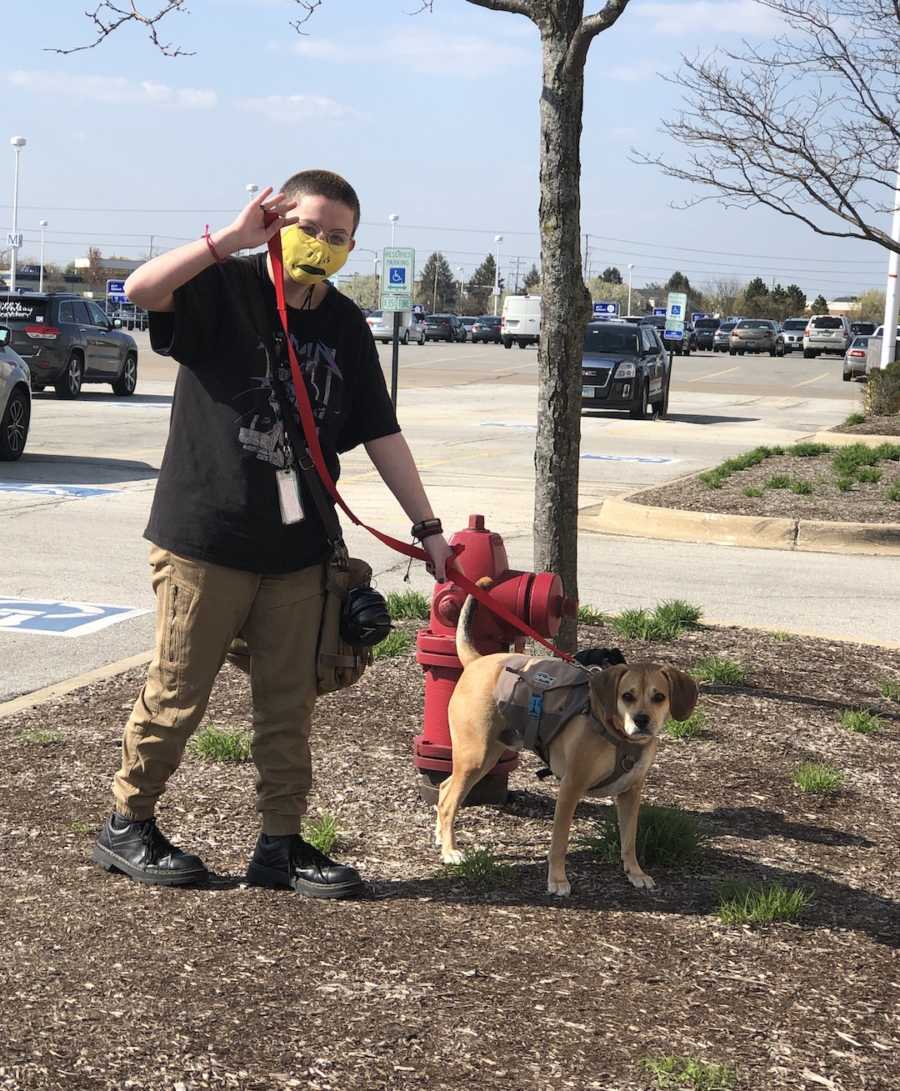
Sharing my story gives me purpose. Life as a neurodiverse individual is complex, often unseen by the outside world. Yet I embrace it fully. I have moments where I wish I were “normal,” but I also know I could never live fully or love myself if I tried to be someone I’m not.
Being disabled is not a weakness—it’s a powerful truth. It’s an acknowledgment that my needs and experiences are valid, even if they differ from the norm. I focus on my strengths: loyalty, intellect, devotion, creativity, humor, empathy, and gratitude. My autism, Tourette’s, anxiety, and depression are not flaws—they are parts of a whole person, a person who is real, resilient, and alive.
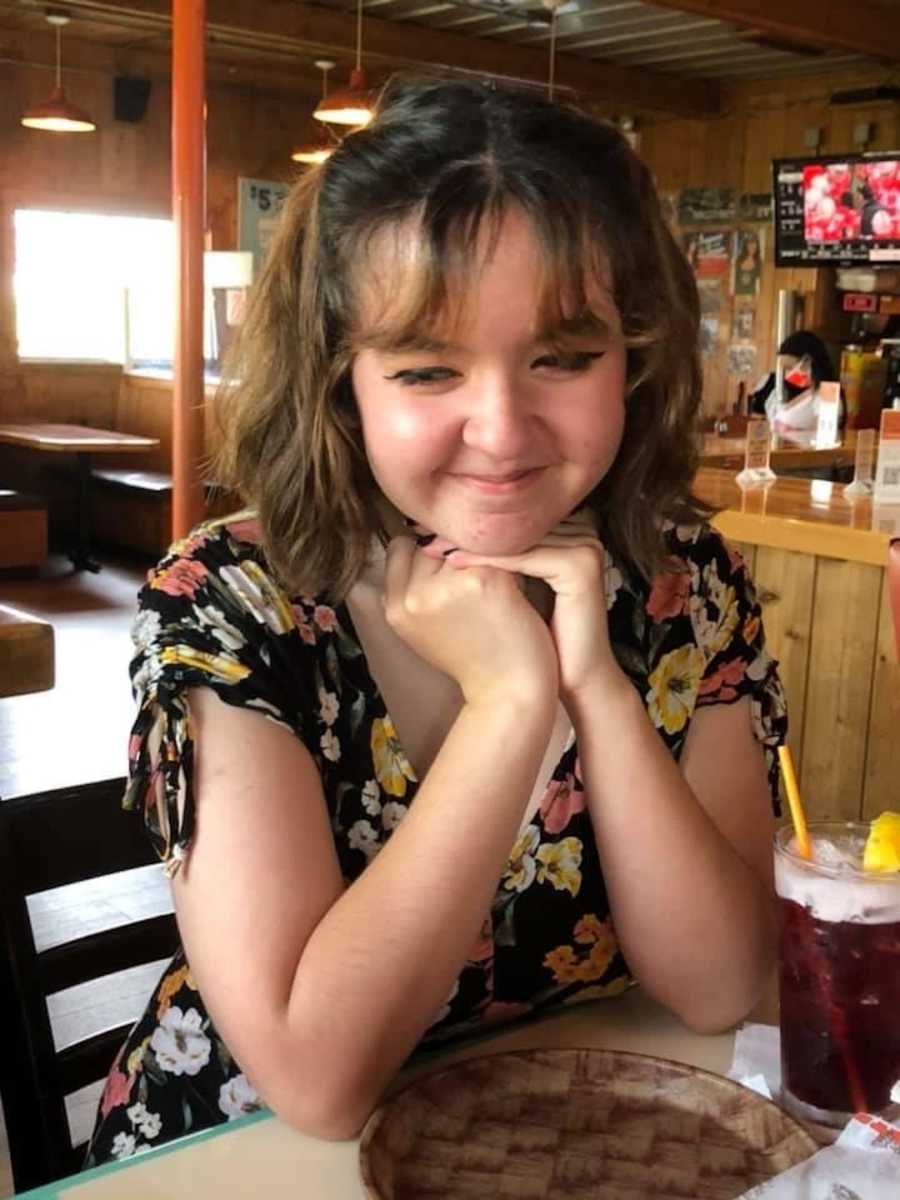
I am me, unapologetically. And for the first time, I can say I wouldn’t have it any other way.