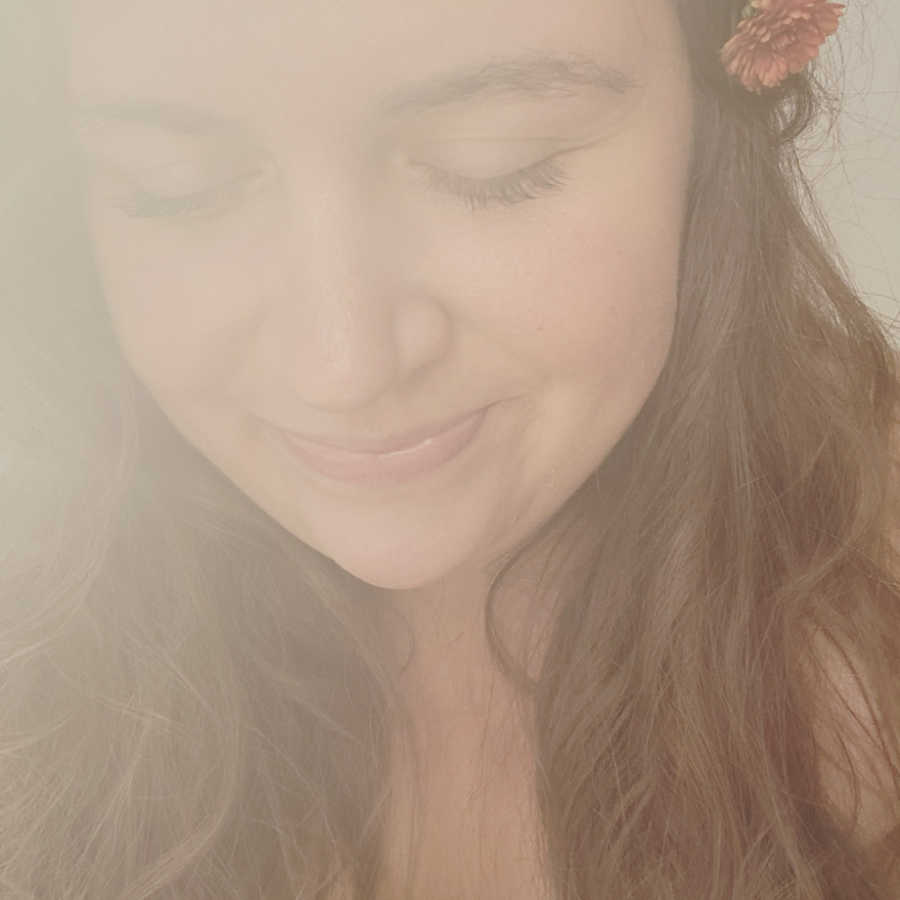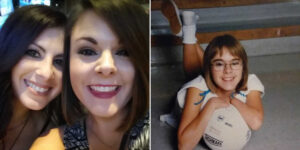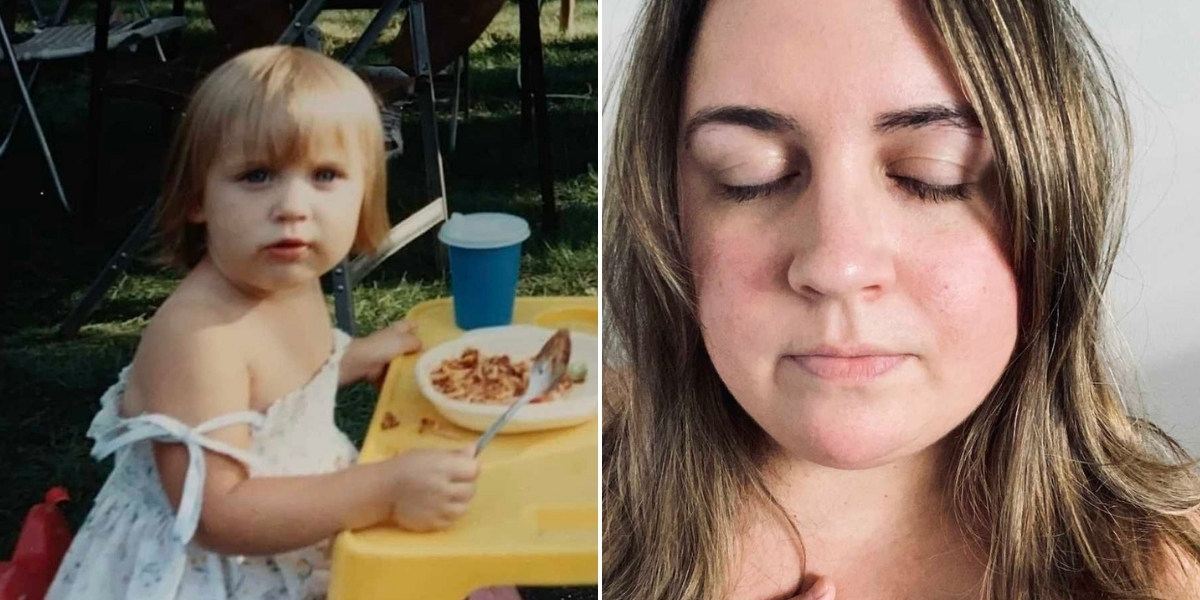
My name is Michele, and I am currently in treatment for Binge Eating Disorder (BED). I don’t remember the exact day BED entered my life. For me, it didn’t arrive as one acute, defining moment—it was more like a thousand tiny, ignored splinters slowly fusing into an infection that I carried for years.
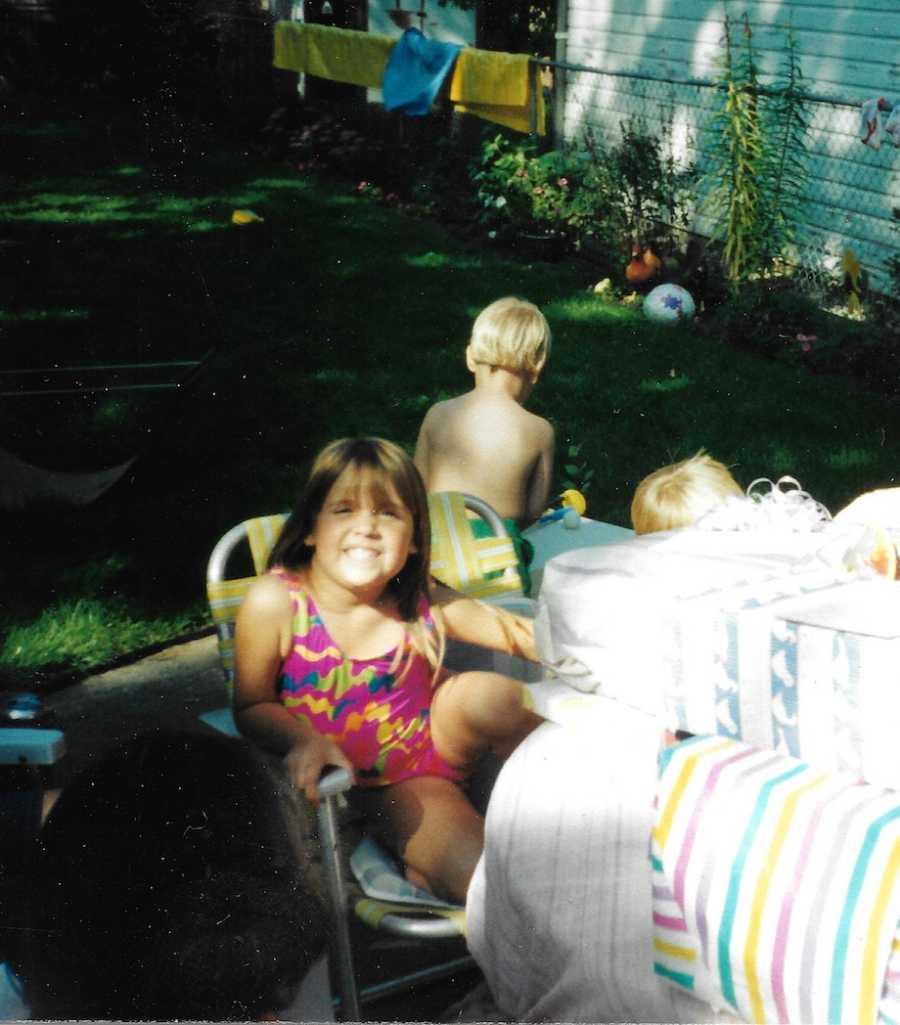
I was seven when I decided to wear a shirt over my bathing suit, ashamed of what my belly looked like. That day, the Michigan sun baked the backyard where we were celebrating my brother’s birthday with a pool party. I had been eagerly anticipating the celebration, excited to play with family and friends, until I glimpsed the girl in the mirror. My caramel hair, streaked with sun, was tousled from playing outside all day, and my skin carried a soft summer tan. My almond-shaped blue eyes, so observant even then, caught every detail—too many sometimes. And my belly, protruding in its green-and-pink polka-dot swimsuit, made me shrink inside.
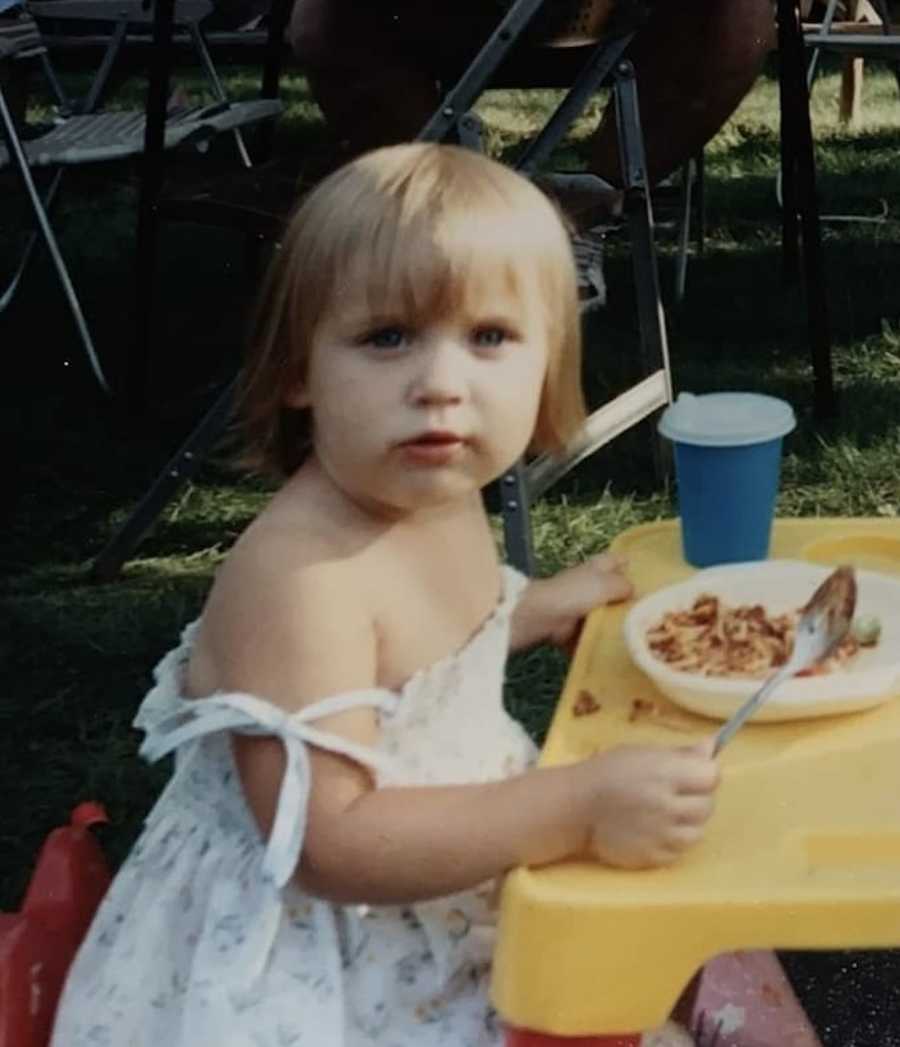
“What if someone calls you fat again?” I thought. That single word, the cruelest I could imagine at seven, felt like a verdict that something was wrong with me. Desperate to cover my shame yet still wear something I could swim in, I rifled through my messy drawer and found a t-shirt that felt safe. When asked why I wore it, I replied, “I feel uncomfortable in my bathing suit around my brother’s friends.” It wasn’t entirely untrue, but it was a shield—safer than telling the truth about how I felt inside.
Over the next few years, my relationship with food and my body became increasingly complicated. By age ten, I began experiencing severe anxiety about eating in public. I would hide my school lunch to avoid judgment. I started tying my sense of self-worth to my appearance and the foods I ate. Mirrors became threatening—I’d turn them away in my bedroom. Pool parties, once a joy, were declined, no matter how much I longed to go.
By thirteen, my struggles escalated into compulsive dieting and exercise. I plastered images of bodies I wished to emulate above our treadmill, determined that high school would begin with a different body, one that might erase the shame and fill the void I felt inside. Restriction became routine, and bingeing became a way to soothe the emotions I couldn’t face. Being sensitive made it even harder—I felt my own feelings and those of others intensely, as if they were layered onto my skin. Overwhelming didn’t even begin to cover it.

Even then, I knew my relationship with my body and food was unhealthy, though I didn’t have the words for it. I felt disconnected from myself, but for a time, I assumed everyone felt the same. Growing up, eating disorders and mental health weren’t openly discussed. Diet culture was normalized, often mistaken for healthy living. My family situation was fractured, and for a while, the world felt unstable. I sought control in food and exercise, using them to numb emotions I felt I couldn’t burden anyone with. The cycle of restriction, numbing, and bingeing became a rhythm that carried me through a childhood that often felt unsteady.

BED is a merciless cycle of shame, anger, guilt, and self-loathing. It’s swallowing feelings instead of breathing them in. Food, something essential for life, becomes both a comfort and an enemy. The first bite provides a temporary escape, a numbing trance that shields you from pain. But once the bag or box is empty, reality returns, bringing with it the harsh rhythm of self-hatred. Living with BED is a daily fracturing, a silent shattering while maintaining a composed exterior for the world.
My journey toward recovery began in 2020. Years of dissociation and ignoring my disorder finally created friction, which blistered and forced me to seek help. That moment came suddenly one evening while driving home. I broke down completely, overwhelmed by everything I had been holding in. Perhaps it was a nostalgic 90s song on the radio, the peach-colored sunset spilling across the sky, a higher power, or simply my tipping point—but in that instant, I surrendered. Everything came pouring out. I couldn’t keep walking as I had been; I had to stop, look inward, and finally meet my body where it was at thirty-two.
Choosing treatment for BED felt monumental, but finding the right program proved even harder. I spent three days calling centers near and far, emailing and speaking with representatives, only to discover insurance covered a single program. Yet when I arrived, I knew instinctively it wasn’t right for me—it catered to adolescents rather than adults. If I was going to commit to healing, I needed a place that felt aligned with who I was and who I wanted to become.
Financial obstacles loomed as well. Like so many, I had lost my job and couldn’t afford out-of-pocket treatment. Still, a spark of determination pushed me forward. I ultimately accessed my pension from a previous job—not ideal, but it allowed me to choose the program that fit my needs. I felt fortunate to have that option, and it reinforced my commitment to recovery.
Recovery has been about learning to bond with my body. It means dismantling the belief that worth is tied to appearance. It means seeing food as nourishment rather than an enemy. It’s breathing through uncomfortable emotions, doing the inner work to reconnect to my authentic self, and practicing gentleness even when it feels impossible. Writing my truths and honoring them has been transformative.
For most of my life, I treated my body as separate from me—and it didn’t work. Pain, fear, and shame grew in that space. Through healing, I’ve learned that returning home to my body is the key to everything. Wisdom comes from listening to her, freedom from moving her mindfully, safety from protecting her.
Recovery isn’t linear, and mending broken pieces takes time. Yet I feel a slow union returning, a merging of everything I was, am, and can be. There is a dancing ebb and flow to the process, but from within the mess, I am learning that wholehearted self-love is unbreakable. When we choose to meet ourselves with compassion, no storm can shatter what we nurture from within.