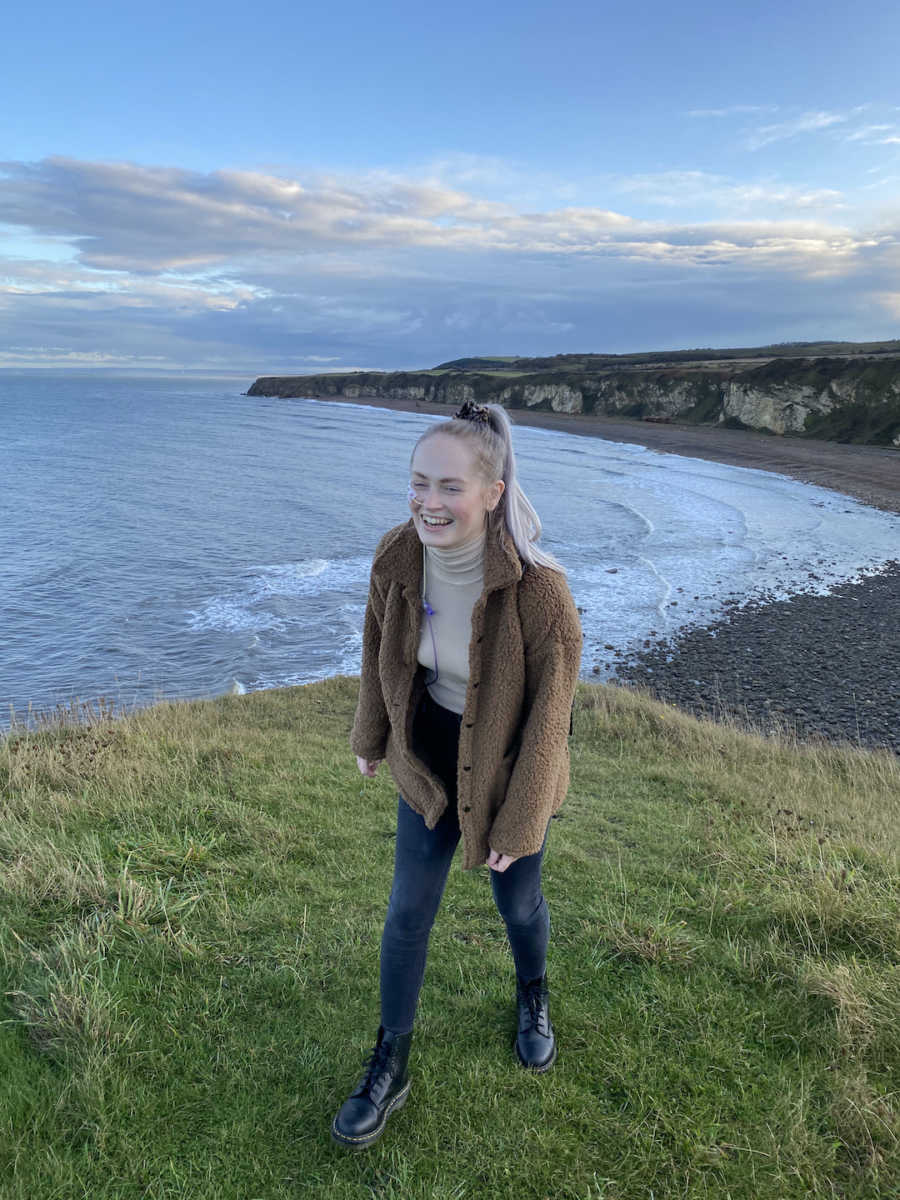
When people ask me about my story, I often pause, unsure of where to begin. There’s so much to say, and yet it all feels deeply personal. I suppose the simplest place to start is with who I am. My name is Jess. I’m 23 years old and live in the North-East of England. I am a daughter, a sister, a girlfriend, a niece, a cousin, and a friend. I’m a cheerleader and a dancer, and I’m also a qualified pediatric nurse. I’m a do-er, a dreamer, a believer, and a proudly organized weirdo. I’m known for my smile—and I’m a zebra. A medical mystery. The girl whose body never follows the textbooks, the one doctors struggle to understand. I am the exception to that phrase taught in medical school: “When you hear hoofbeats, think horses, not zebras.” I am that zebra, and this is the story of how I earned my stripes.
Growing up, much of my childhood and teenage years were spent searching for answers about what was wrong with my body—answers that, looking back now, were always hiding in plain sight. My body was never really “normal,” even though I didn’t know that at the time. Whenever I did get fragments of answers, they only seemed to open the door to even more questions. No one ever expects to be thrown into the world of chronic illness, but with more than 12 diagnosed chronic conditions, I can say with certainty that it has completely reshaped both my life and my perspective. From a young age, I stood out—not always in ways that seemed medical. I was always bendy, always bruised, clumsy, and awkward in how I walked or ran. Long distances felt impossible. Looking back, I remember my legs feeling like they were turning to lead and my hips sliding around in their sockets just from walking around a shopping center. I never said anything because I truly believed that was how everyone felt. I thought it was normal.
As I grew older, problems with my bladder became more noticeable. I spent years going in and out of children’s hospitals, chasing answers that never really came. It was exhausting and frustrating in a way that’s hard to describe. What I didn’t realize then was how dramatically things would escalate. By the age of 23, I would have stared death in the face more than once and learned lessons no child, teenager, or young adult should ever have to learn.
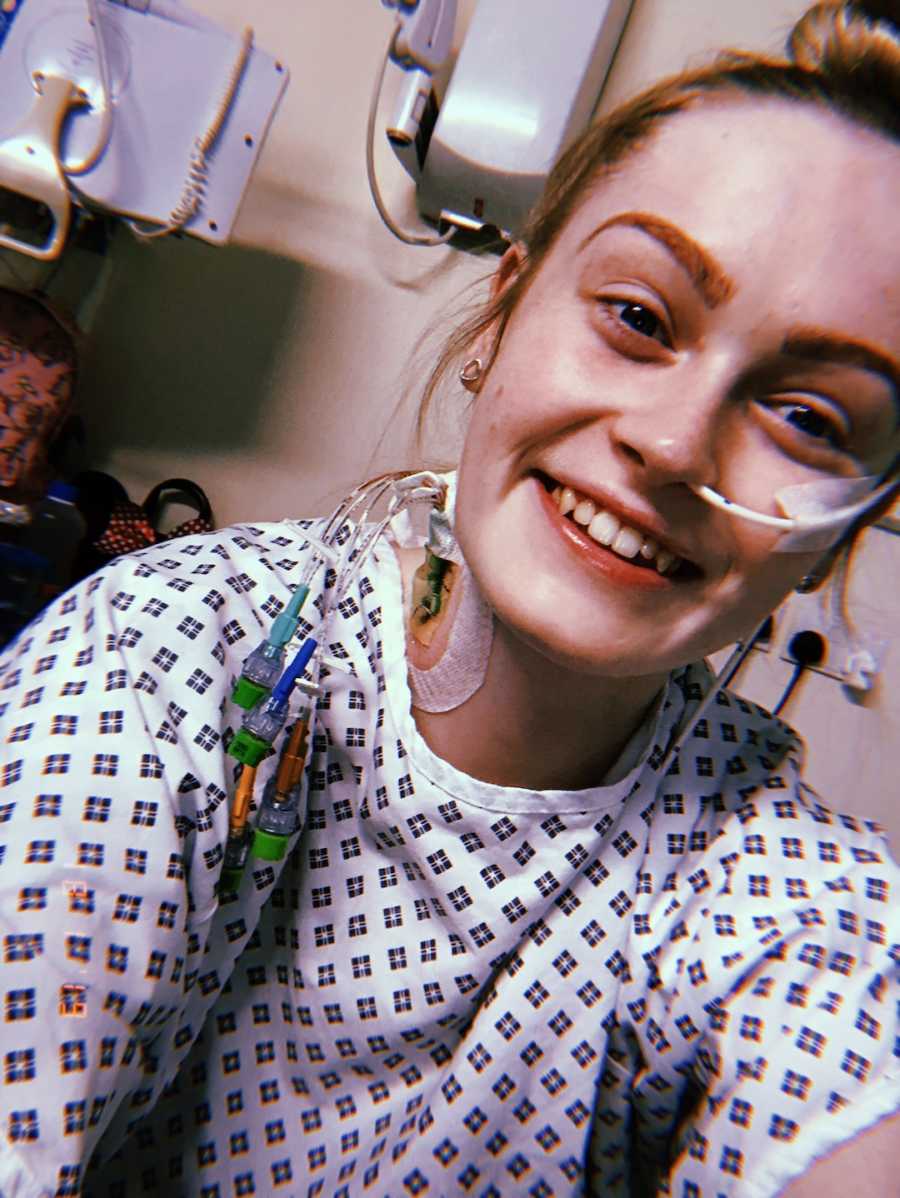
My health took a noticeable turn for the worse during my teenage years. Things started to unravel in multiple ways at once—crippling fatigue, worsening joint pain, cardiac issues, immune system problems, and increasing gastrointestinal symptoms. The list felt endless. I vividly remember countless trips to A&E, endless outpatient appointments, and repeated hospital admissions, all with very few real answers. My life became a constant fight to be believed. Everything was blamed on anxiety, while I was still trying to sit exams, attend school, and hold onto some sense of normality. One night stands out clearly in my mind: I was admitted to hospital screaming in pain, only for staff to take my parents aside and ask if they thought I was pretending for attention. They said no, of course, but even now I struggle to comprehend how many additional battles you face when you’re chronically ill—as if the illnesses themselves aren’t enough. I believed that once I finally had a diagnosis, everything would change.
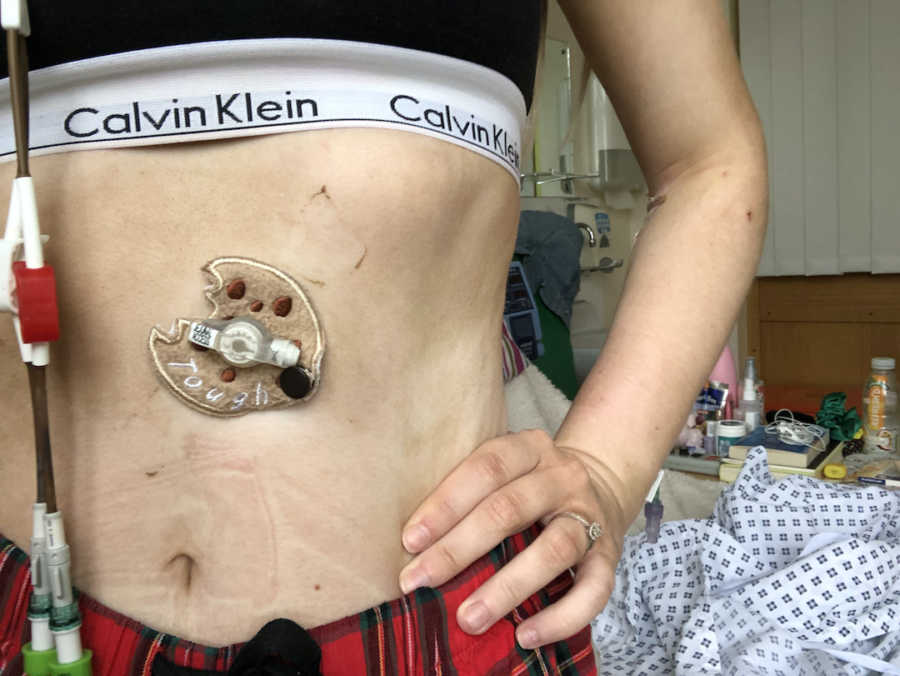
After more than 12 years of searching, I was finally diagnosed with Ehlers-Danlos Syndrome (EDS), a genetic connective tissue disorder affecting collagen. Because collagen is everywhere, EDS affects almost every part of the body. At the time, I was diagnosed with what was known as Type 3 EDS, now called Hypermobile Ehlers-Danlos Syndrome (hEDS). I could spend an entire article listing the symptoms and comorbidities, but what matters most is the impact it has had on me as a person. Sometimes I wish I’d never received the diagnosis, because people with EDS face constant disbelief. We’re accused of exaggerating, of making things up, and far too often our symptoms are blamed on mental illness rather than physical reality.
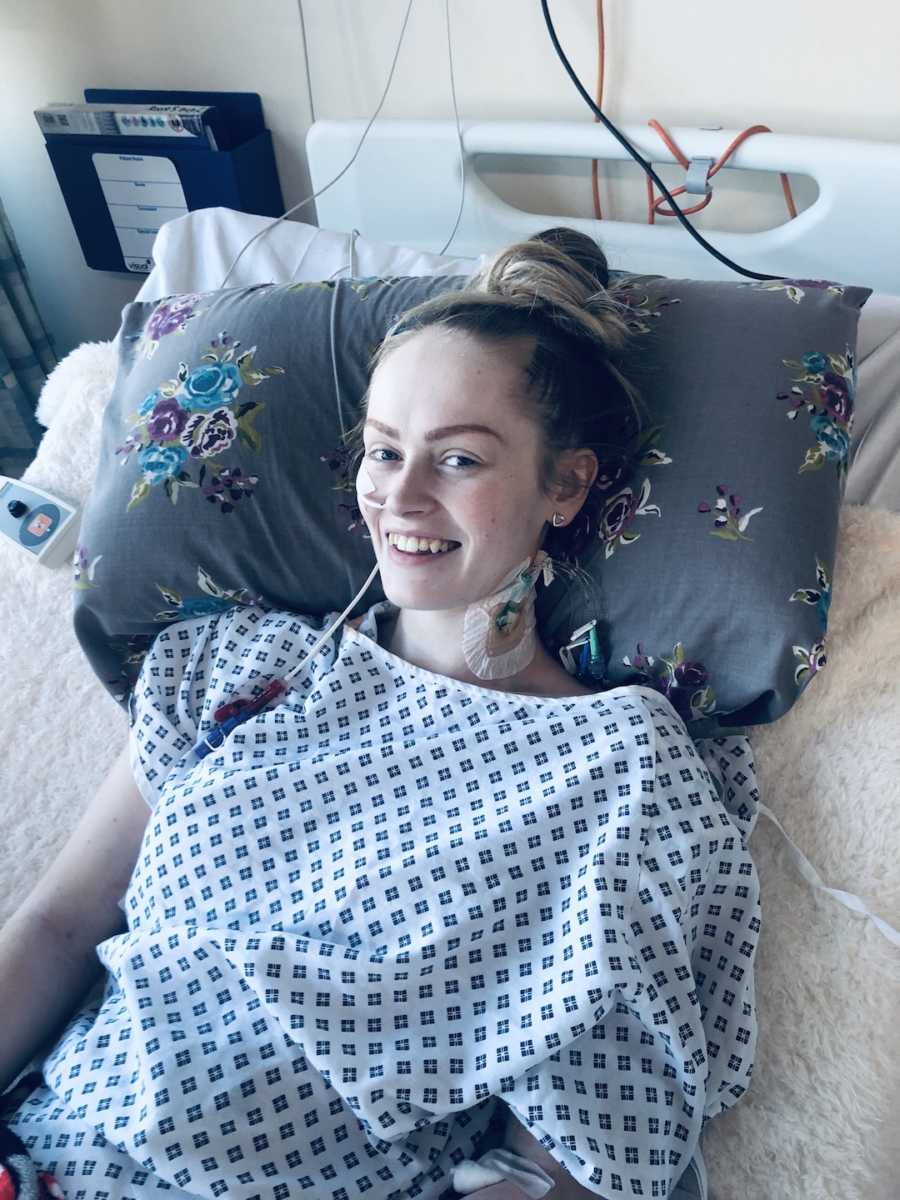
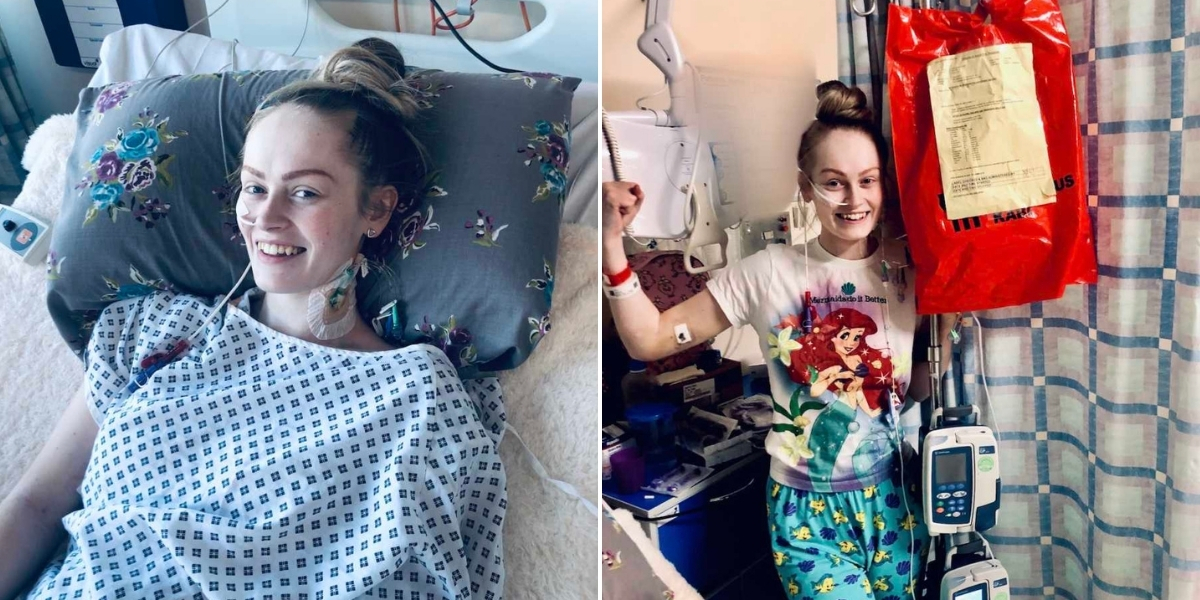
By the time I reached 21, my diagnosis list had grown longer and more complex, and my gastrointestinal symptoms had become completely unmanageable. I went through every type of feeding tube imaginable before eventually being placed on Total Parenteral Nutrition (TPN), delivered through a large vein in my chest. For nearly two years, I lived almost continuously in hospital. The impact of that kind of life cannot be overstated. Being told at 21 that I was in intestinal failure was terrifying, but it also taught me never to take simple things—like eating, drinking, or living at home—for granted again. Strangely, that period was also one of the most hopeful chapters of my journey. I felt as though one chapter had closed and that nutrition would no longer be a daily battle. That peace didn’t last, but I’m still grateful I had it, even briefly.
Chronic illness has a way of laughing at plans. TPN came with serious, life-threatening risks, and I experienced multiple episodes of sepsis as a result. Anyone who has had sepsis knows how truly terrifying it is. My first episode is burned into my memory. I felt my body shutting down, completely out of my control. I was convinced I was going to die, that if I closed my eyes, I wouldn’t open them again. There is no fear quite like it. Once again, a lack of understanding about my conditions meant I wasn’t believed, and my symptoms were blamed on anxiety—while a life-threatening infection coursed through my body.
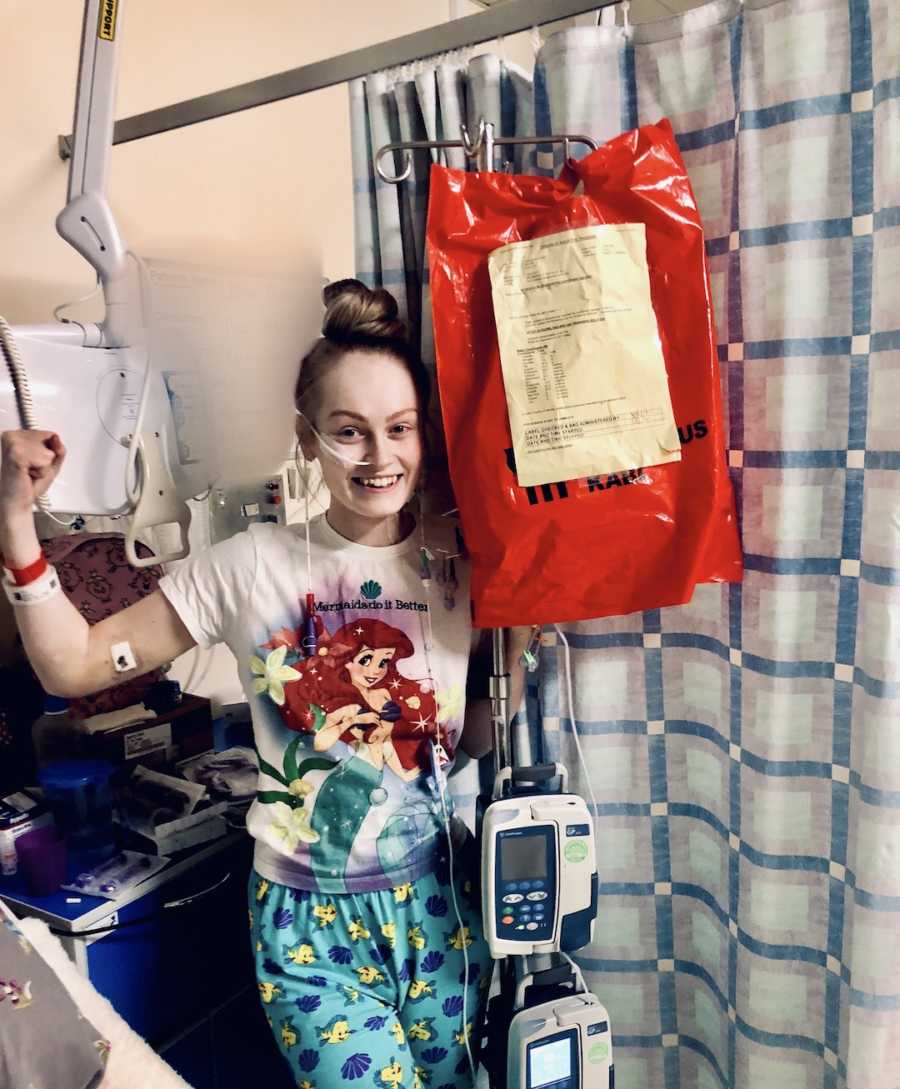
Repeated sepsis episodes, combined with severe allergic reactions, ultimately meant I had to come off TPN. The way this was handled was deeply traumatic, and I was let down by professionals I trusted. That experience left scars that still follow me today. My nutritional status deteriorated again, and I returned to tube feeding. Yet, from that trauma came something unexpectedly beautiful. When it became clear I needed highly specialized private care, I set up a fundraising page. To this day, I’m overwhelmed by the kindness of others—over $8,000 raised and still growing. Chronic illness has taught me to actively look for the good. It’s not always obvious, but life has a remarkable way of creating diamonds out of dirt if you search hard enough.
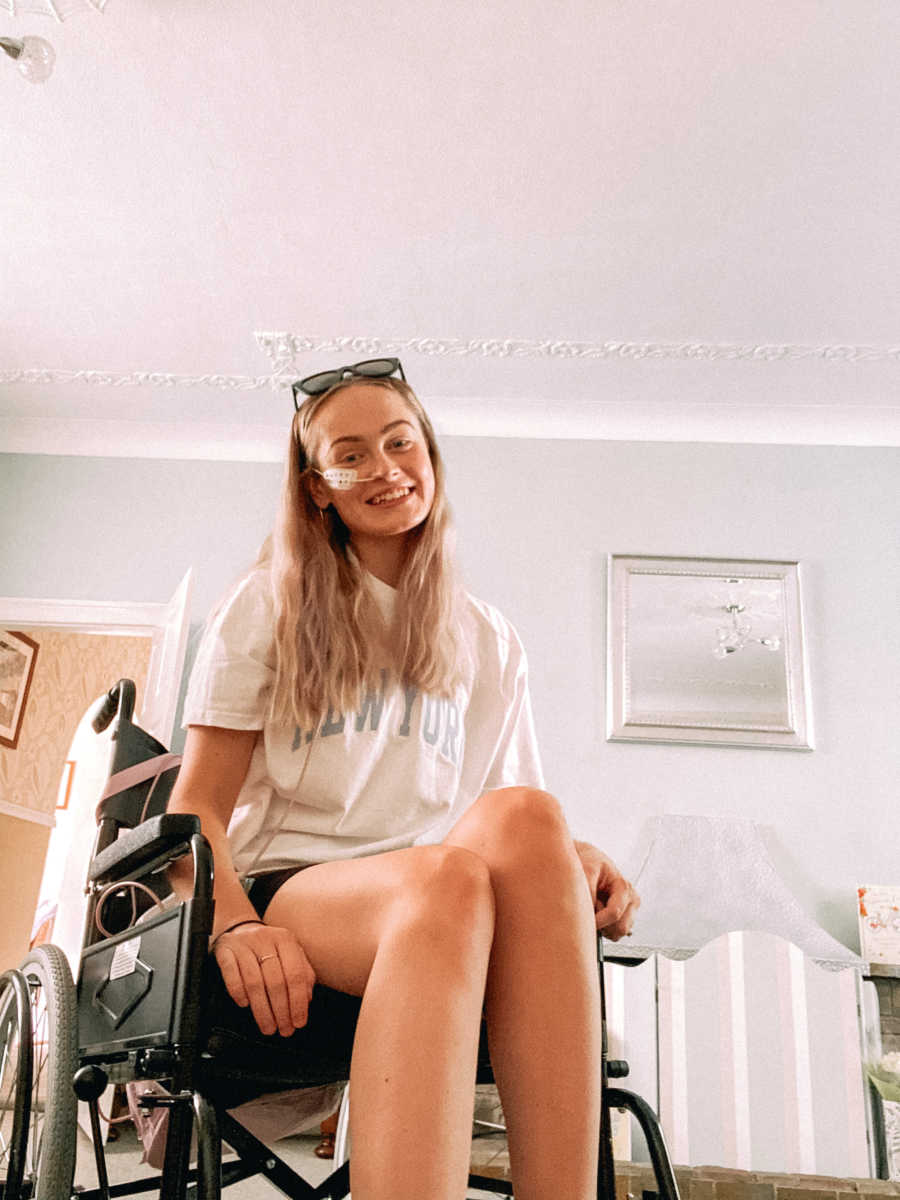
Life now is still a daily challenge. Simply getting through a day can feel like a victory. Keeping a body alive that struggles to perform basic functions is no small task. No one else in my immediate family lives with the same conditions, though my EDS likely comes from my mom, who is asymptomatically hypermobile. That alone can feel isolating. Chronic illness has taken so much from me, including the life I might have lived had my health not intervened. Being a disabled young person is incredibly isolating in a world built for people whose illnesses come and go. Still, I’ve tried to make the most of the opportunities I’ve been given.
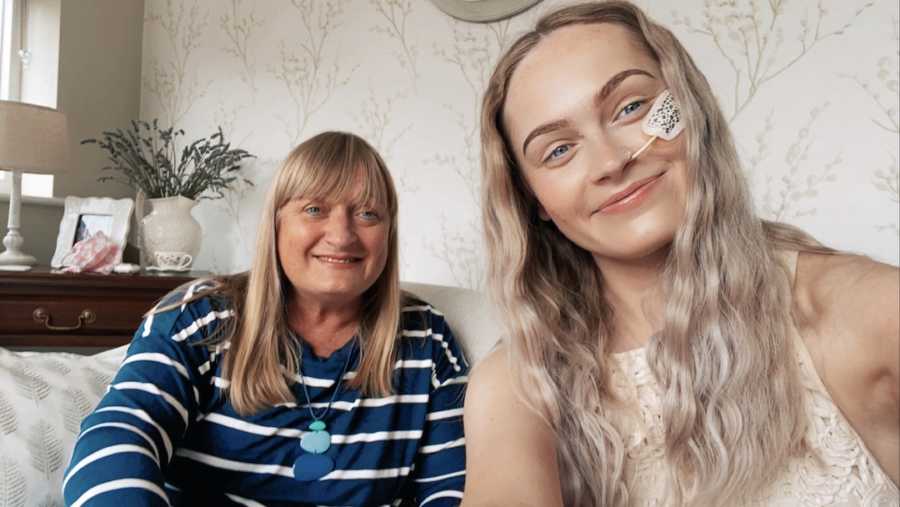
I can’t share my journey without speaking about my family. They have carried me through my darkest moments, lifting me up physically and emotionally more times than I can count. My mom, especially, has been at the center of everything—my fiercest advocate and my best friend. Chronic illness has strengthened our bond, even while placing strain on it. Knowing she would never walk away, no matter what, is something I treasure deeply. I sometimes feel guilty that my battle became theirs, that their lives were forever changed because of me. I don’t have words for that feeling, only gratitude. They encouraged me to keep dreaming, and because of them, I’ve achieved things that feel nothing short of miraculous.
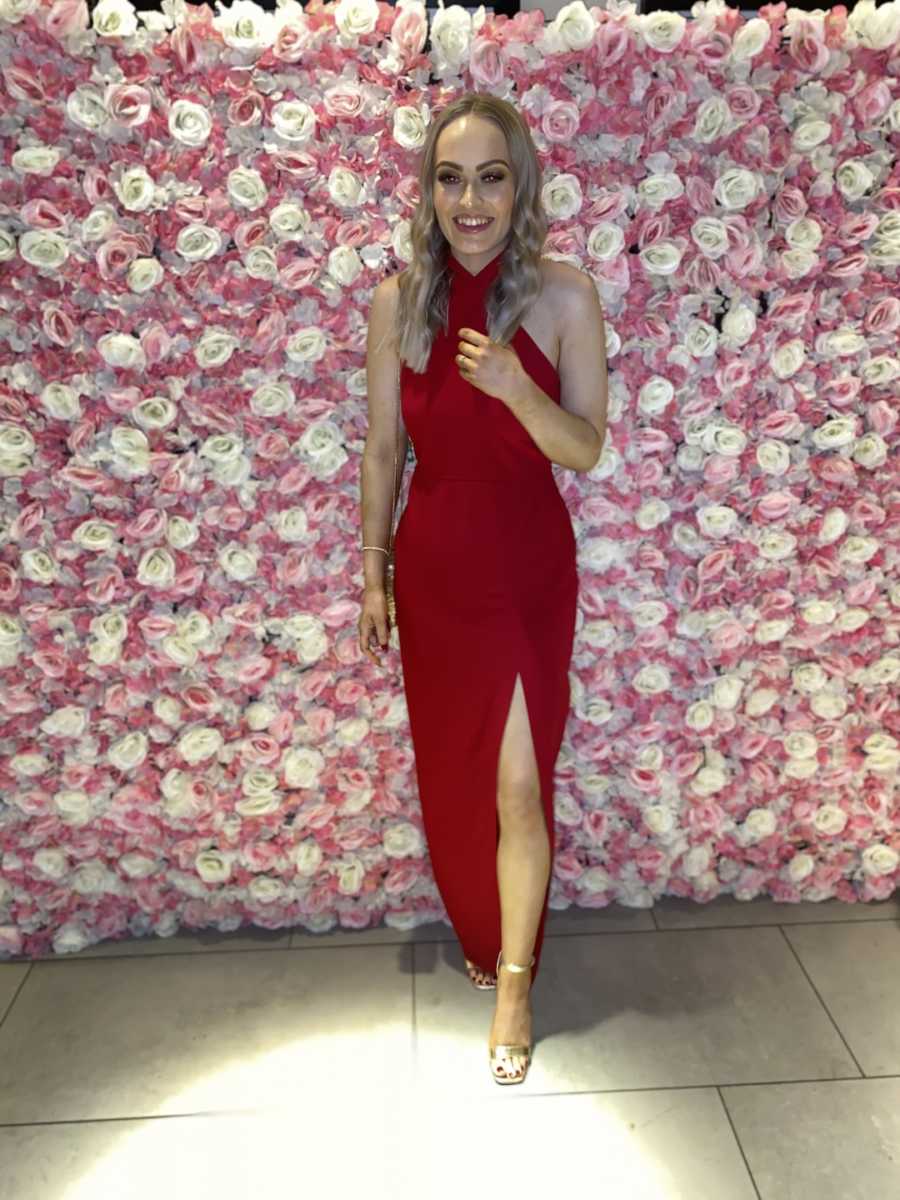
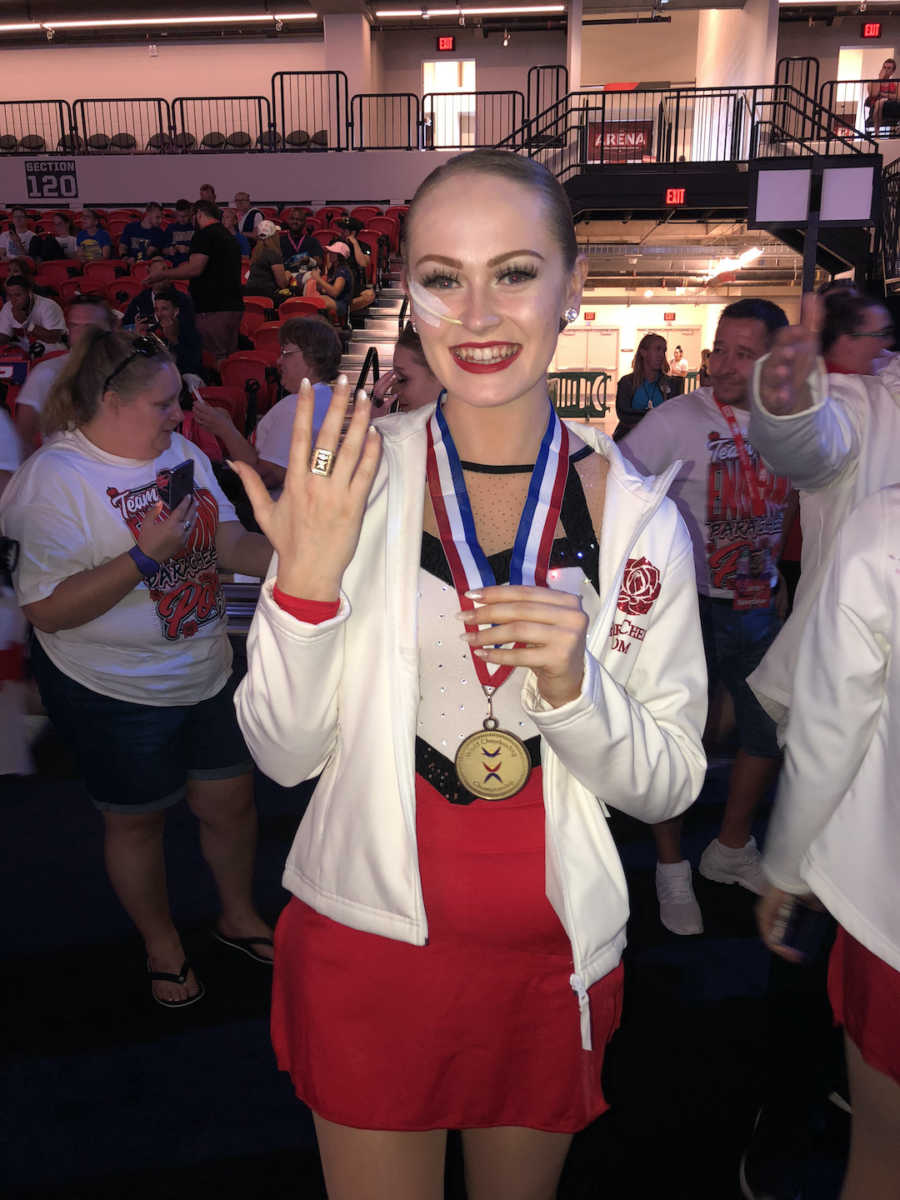
I’ve always tried to remain a person beyond my illness. I continued cheerleading and dancing, even representing England at the Cheerleading World Championships in 2018. Ironically, it was my illnesses that led me to my career. Nursing wasn’t always the plan. I pushed through GCSEs, A-levels, and began a Psychology degree at Durham University, only to realize my heart was elsewhere. Leaving was terrifying, but it led me to exactly where I was meant to be. I wanted to use my pain and my experiences to help others, and becoming a children’s nurse was the best decision I’ve ever made.
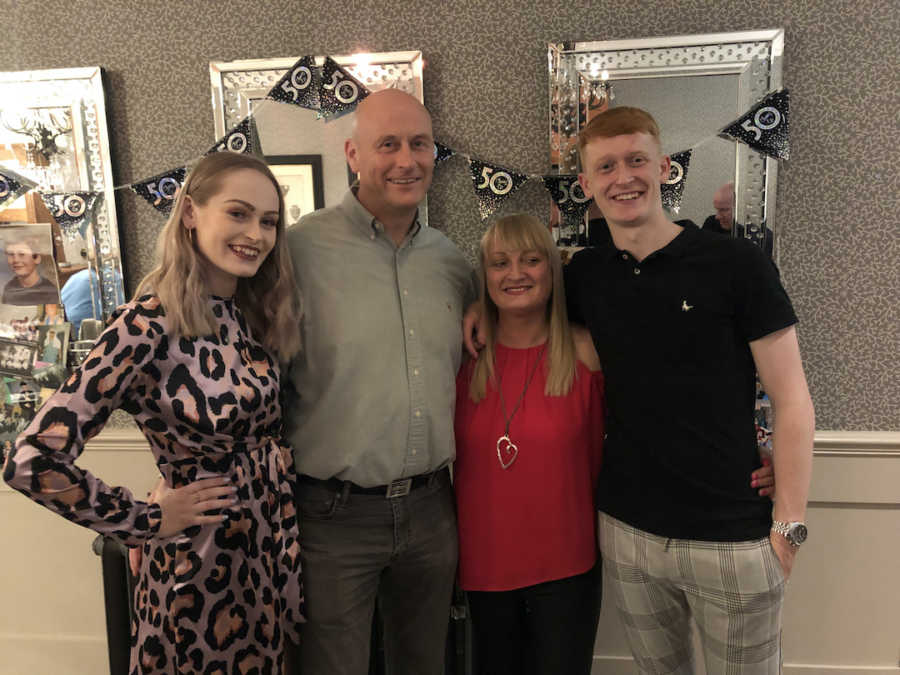
My health deteriorated significantly during my degree, and there were moments I truly believed I wouldn’t qualify. I fought barriers at every turn—studying from hospital beds, attending lectures between infusions, completing assignments through pain and exhaustion. But something inside me refused to give up. I owed it to the children I would one day care for, to show them and their families that hope still exists, even when the future feels impossible.
There were moments that confirmed I was exactly where I belonged. A tube-fed child telling me she wanted to be a nurse “just like me.” Receiving a First-Class dissertation result while hospitalized. Graduating while recovering from sepsis. That strange contrast between illness and achievement has defined my life, and somehow, I made it work.
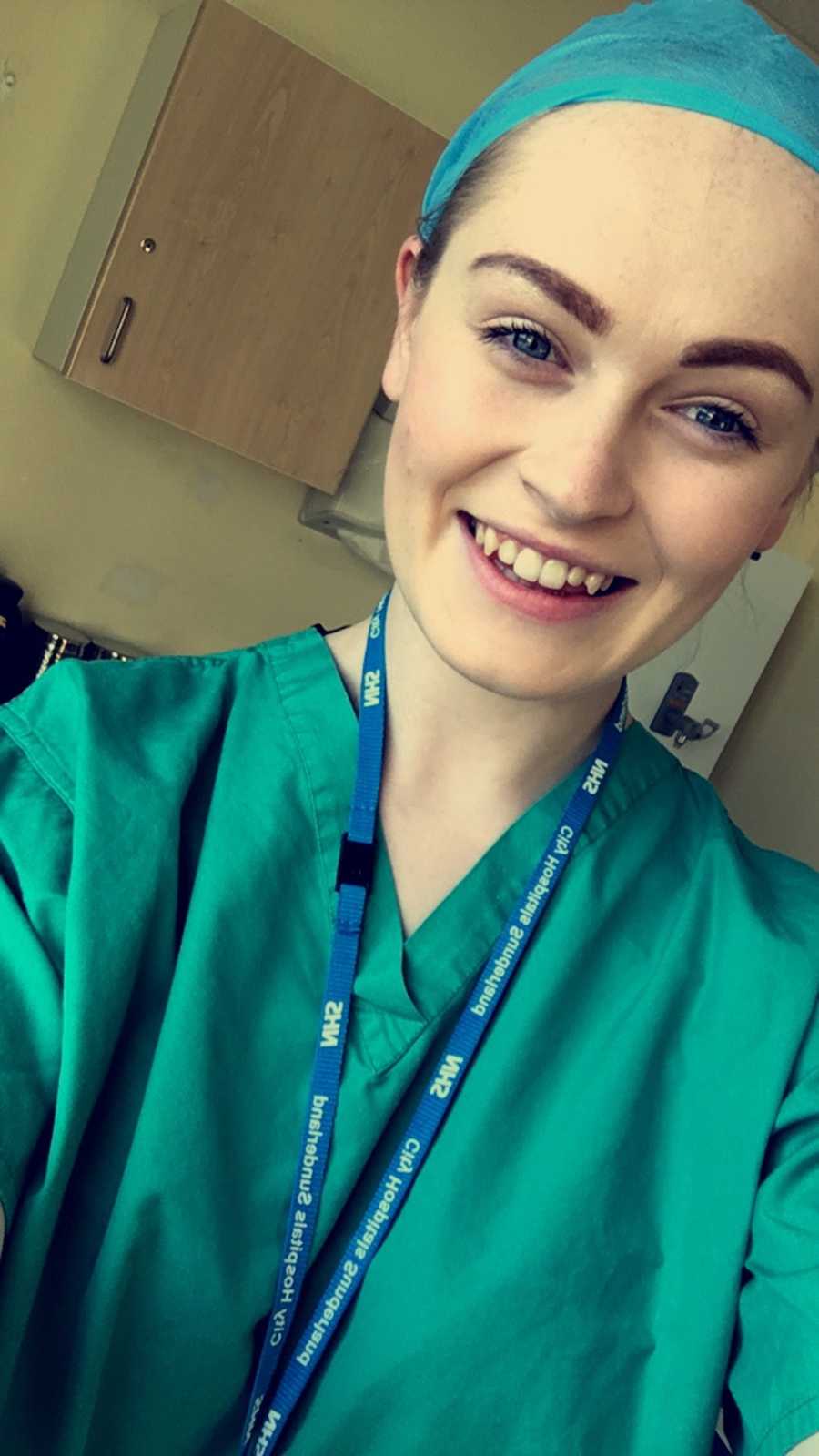
I qualified as a Pediatric Nurse in February 2020 with a First-Class Honors degree. Working as a nurse while managing chronic illness is challenging, but my goal is simple: to provide the kind of care I would want for myself.
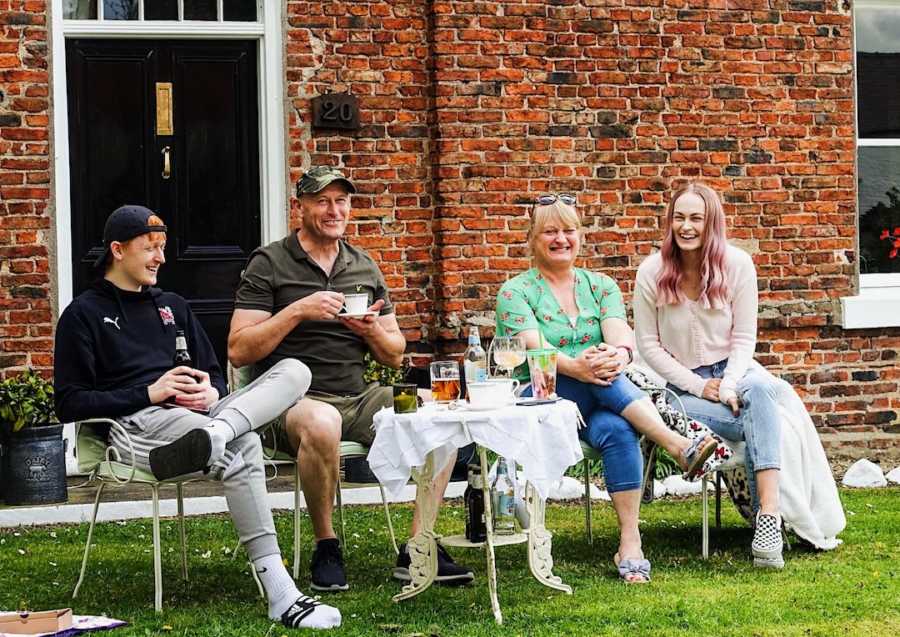
I won’t end with forced positivity. Chronic illness is hard. Some days are about rest, tears, and anger. Other days are about standing up and choosing to live anyway. If you give each day your best with the body you have, you can be proud—no matter how small the win. Hope comes in many forms, and it’s one of the most powerful forces we have. Hold onto it. Keep it alive. Sometimes, hope is what keeps us alive too.