Coming to Terms with Co-Parenting
“I never expected that having a child would teach me how to co-parent, but life had other plans. It was right in front of us—staring us in the face, whether we were ready or not. From the very beginning, I realized we had two paths: remain bitter and resentful, dragging 18 years of tension behind us, or choose forgiveness and commit to working together for the happiness of our son.

My son’s dad, Nate, and I separated just days before his first birthday. We went from being two young, college-aged kids with a baby to two young adults facing heartbreak and the daunting task of learning how to co-parent. The details of our separation are private, but it wasn’t a decision we made lightly. At 19 and 21, we tried in every way we knew to make things work for our son. Eventually, we realized the best thing we could do for him was to live separately. He deserved two happy parents, even if that meant we wouldn’t share a home anymore.
No matter how thoughtfully we approached it, letting go was gut-wrenching. The early days of co-parenting felt like hitting rock bottom. I felt like a failure, consumed by worry about what he might miss: split holidays, divided belongings, no family vacations or shared dinners. I feared we would become just another statistic—young parents who couldn’t make it work for the sake of their child.
Once we acknowledged that our fears mirrored each other’s, we had a conversation about what truly mattered. We vowed to beat that statistic, to be great parents together even without being a couple. We refused to let Carter become collateral damage. He wasn’t property to argue over; he was a little boy who deserved the world. And together, we would give it to him.
Learning to Co-Parent
Our co-parenting journey was built on one core principle: respect. I would always be Carter’s mother, and Nate would always be his father. To ensure he had equal access to both of us, we committed to open communication. Every decision—daycare, health insurance, playdates, behavioral concerns—was discussed openly and respectfully.
The first step was dismantling the barriers that had formed between us as former partners. We turned to couples counseling—not to reconcile romantically, but to learn how to communicate effectively as co-parents. The work was challenging. We had to move past the pain that split us, and shift from intimate partners to friends. Some sessions left us sad or defeated, but with perseverance and a single shared goal, we got through it.

If I could offer one piece of advice to parents beginning this journey: seek professional help. We wouldn’t be where we are today without the guidance of our counselor, Beth, who spent months helping us navigate the rocky early terrain.
Over the next year and a half, there were ups and downs, disagreements, and even hurtful words—but never in front of Carter. Protecting him from adult conflict was paramount. He didn’t need to know the pain we were processing; he needed to know he was loved equally by both of us, exactly as he was on the day he was born.
When people ask how we explain our separation to him, we keep it age-appropriate and free of heartbreak. Usually, it’s as simple as, “Dad and I are still friends. Sometimes adults have to make adult decisions, but that doesn’t change how much we love you.” Children learn more from observing than listening, and Carter sees us communicating, celebrating milestones, and supporting him together. He has never felt the weight of our past; he has only felt love.
Introducing New People
When Carter was two and a half, I met my husband, Josh. Dating as a single mom was complicated; I needed someone who could embrace not just me, but my “package deal” that included a son and an ex who would always be in our lives. This was another boundary Nate and I had discussed: when it would be appropriate to introduce a new partner. Trust became the second layer of our co-parenting foundation.

Josh proved to be understanding, patient, and willing to respect the structure we had built. To anyone navigating single parenthood, I would say: wait for the person who never questions co-parenting dynamics, who embraces all that comes with loving a child who isn’t biologically theirs. It’s not an easy journey, and it requires a rare kind of heart.

Becoming a Blended Family
Once everyone was ready, I introduced Nate and Josh to each other. Nate understandably worried how this might affect co-parenting, so I reassured him: “You will always be Carter’s dad. Josh will never replace you; he will only add to our family.”
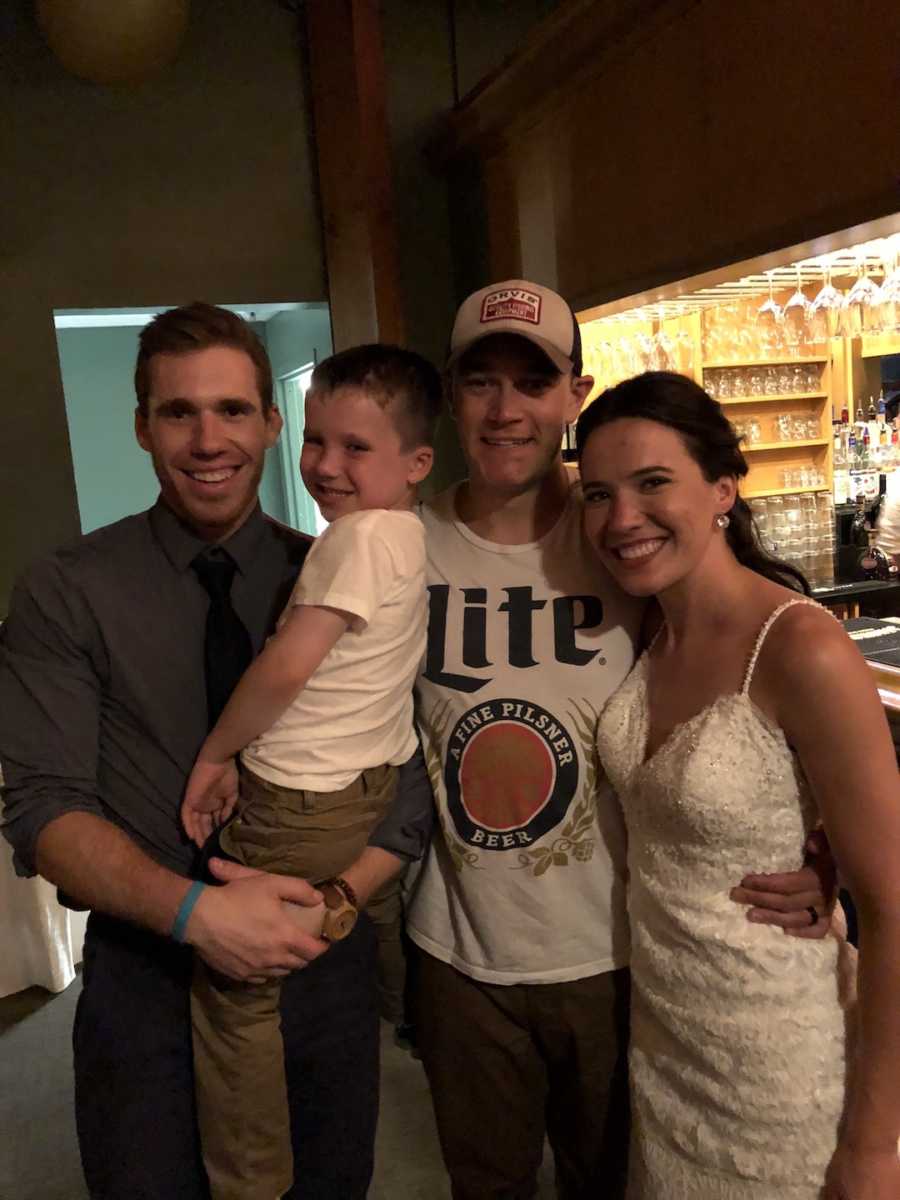
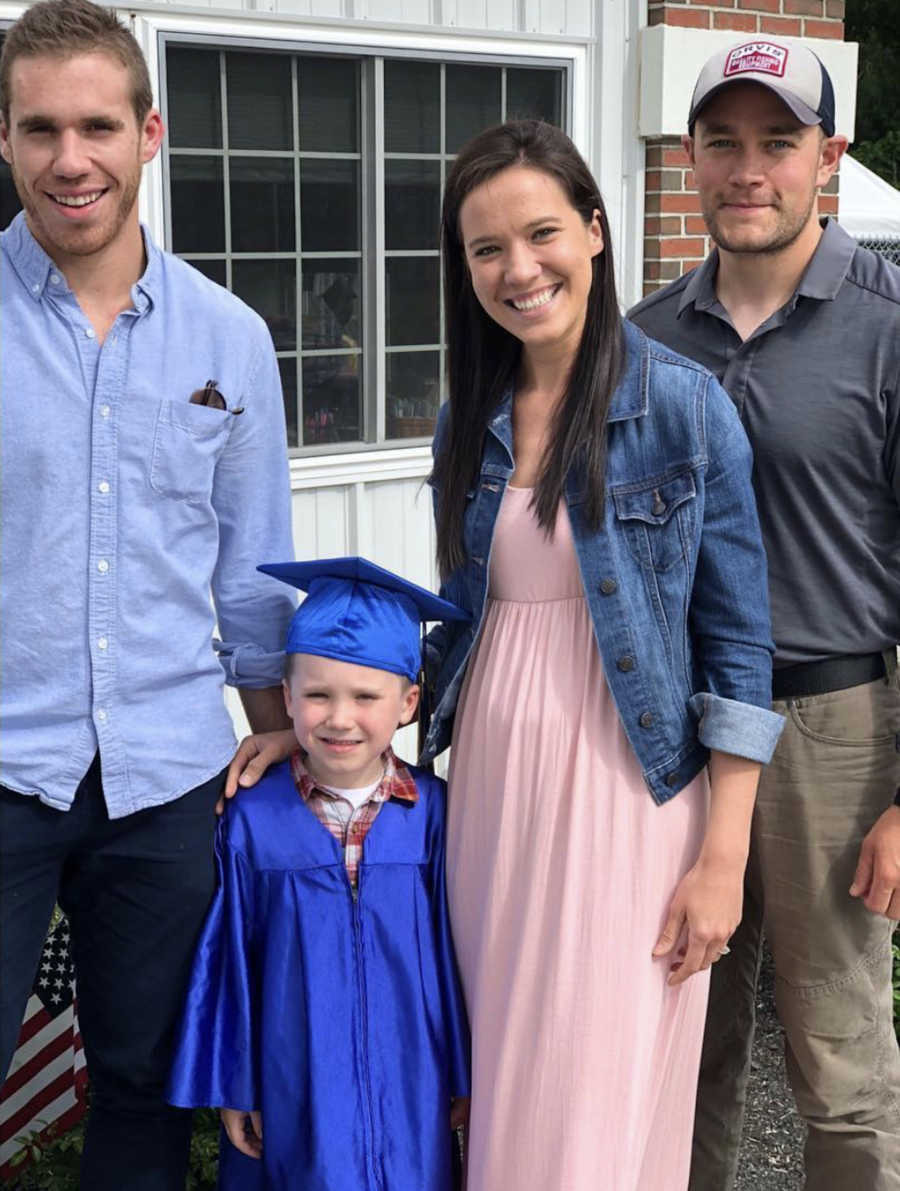
The next three years were a learning process for the three adults. We made it a point to attend every event together, from sports games to local fairs. One of our highest moments came in 2018 when Nate attended Josh’s and my wedding. It was Josh who suggested inviting him: “It’s a big day for Carter too.” That simple gesture transformed us from co-parents to a real, functioning family.
Nate later introduced us to Kirsten, his partner, and I was relieved to see she embraced our family. She loves Carter and has always supported our blended family dynamic. Through her and our efforts, the childhood experiences I once feared Carter would miss—family dinners, holidays, shared milestones—became fully possible.

This year, we celebrated Christmas together: four adults, our son, and my daughter from Josh, sharing a meal, laughter, and love. Seeing Carter’s excitement and knowing he felt fully supported and cherished reminded me of every tear, disagreement, and challenge we had overcome. It had all been worth it.
The Reward of Perseverance

I know that not every separated family reaches this level of harmony. It requires commitment, communication, and trust. But seeing Carter thrive in a home filled with love and respect is proof that it can be done. I am proud of all four of us for putting aside our emotions to prioritize his happiness. My hope is that anyone reading this who faces co-parenting challenges will be inspired to try. Start small, take any step forward, and remember: your child deserves this love, and so do you. It’s hard work—but worth every single second.”