We first decided to get genetic testing for our son, Sawyer, after he didn’t pass his newborn hearing screening. “It’s probably nothing,” the nurse reassured us. “It could just be fluid. He should come back in a week for a follow-up.”
But it wasn’t just fluid. One week later, he failed another test at the ENT. I asked the doctor when we should start to worry, and his answer hit me like a punch: “You should worry now.” And I did.
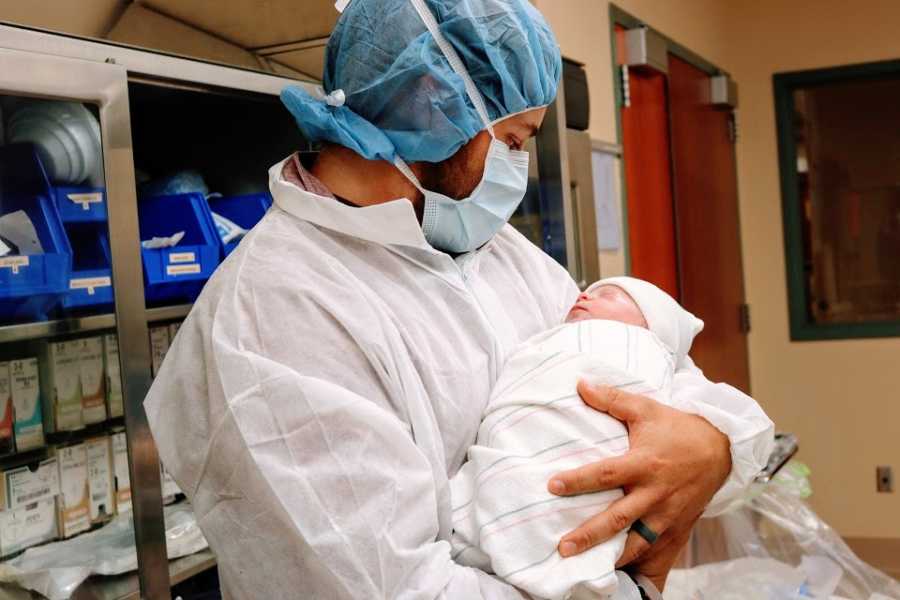
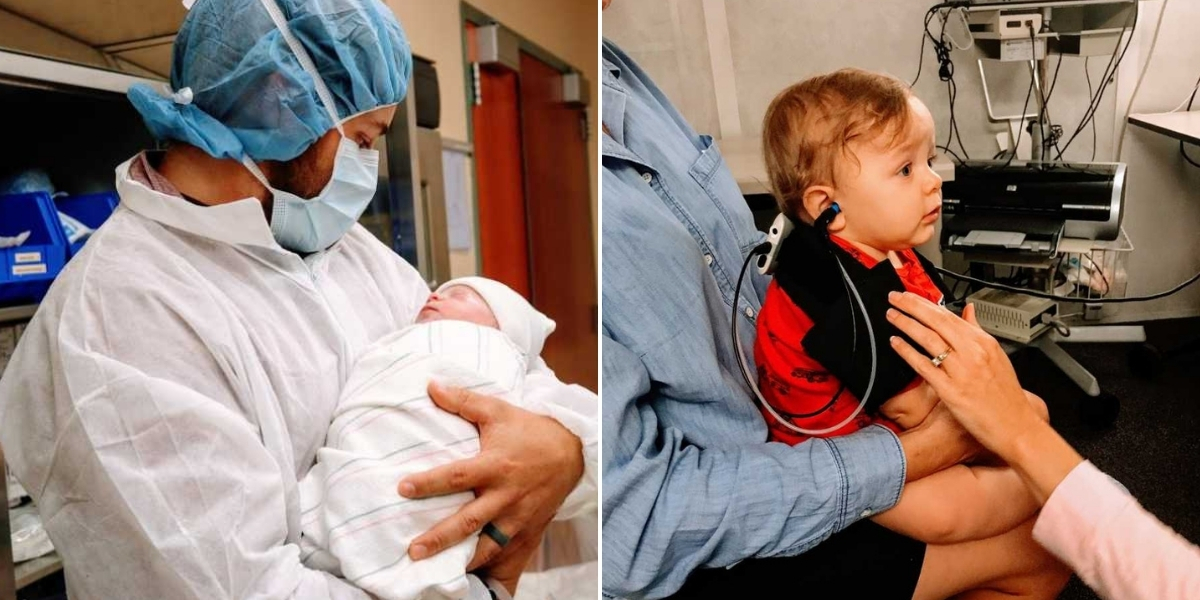
A few weeks later, we found ourselves at the children’s hospital in the audiology department. We were nervous, of course, but we were also soaking in every newborn smell, every tiny sigh and coo, hoping against hope that this was just a fluke. Sawyer needed an ABR—auditory brainstem response testing—which meant he was hooked up to a tangle of wires across his tiny head.
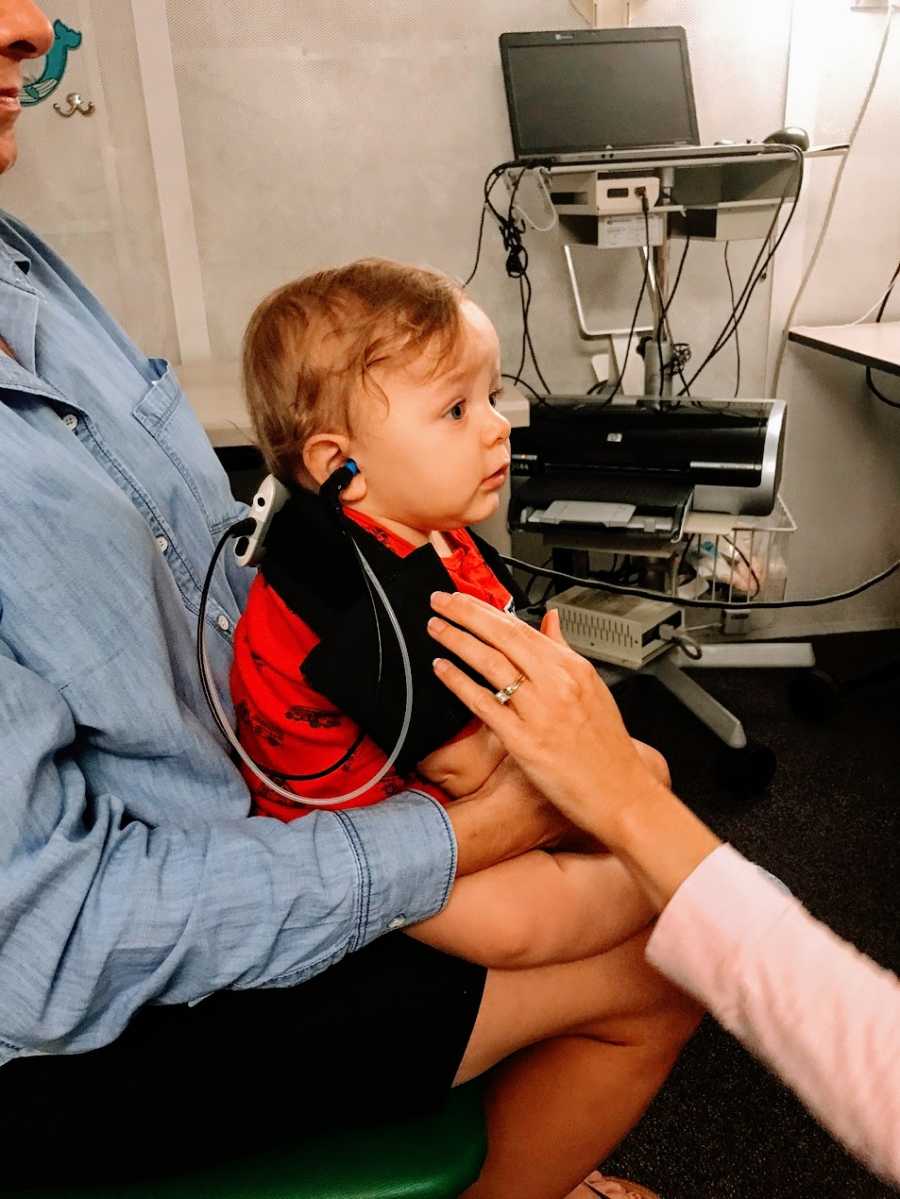
Not long into the test, the audiologist gently said, “We aren’t finished yet, but it does look like he has some kind of hearing impairment. We’ll know more when we’re done.” I nodded numbly, shock pinning me in place, and the rest of the appointment blurred into a haze.
I remember the next moment clearly: standing outside in the hospital parking lot, my husband holding me as I cried into his chest. As a parent, you want to fix everything for your child. This was one thing I couldn’t. The emotions washed over me in waves: guilt, fear, anger. I replayed every moment, every decision, wondering if I could have done something differently. I worried life wouldn’t be easy for my sweet boy.
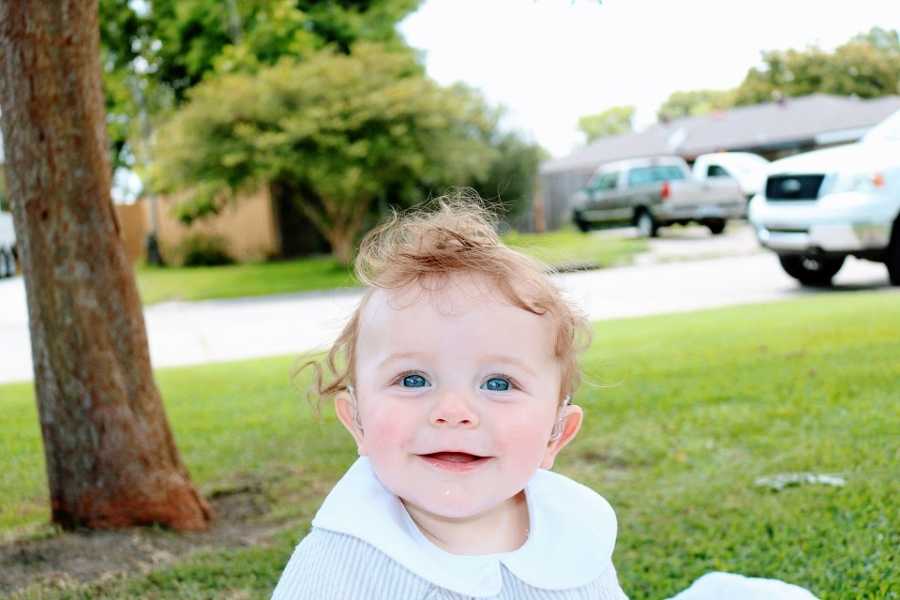
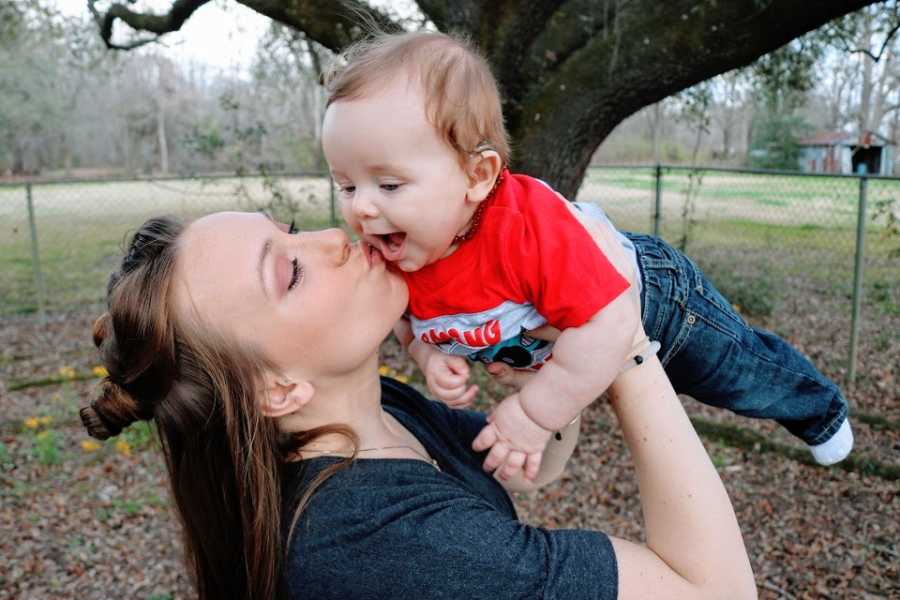
Sawyer was diagnosed with bilateral moderate-to-severe sensorineural hearing loss, caused by irreversible inner ear damage. We learned he might still respond to very loud sounds, which explained why I had reassured myself when he startled at the dog’s bark, thinking he could hear just fine. The truth was, he couldn’t hear soft sounds—like conversation, gentle music, or my voice saying, “I love you.”
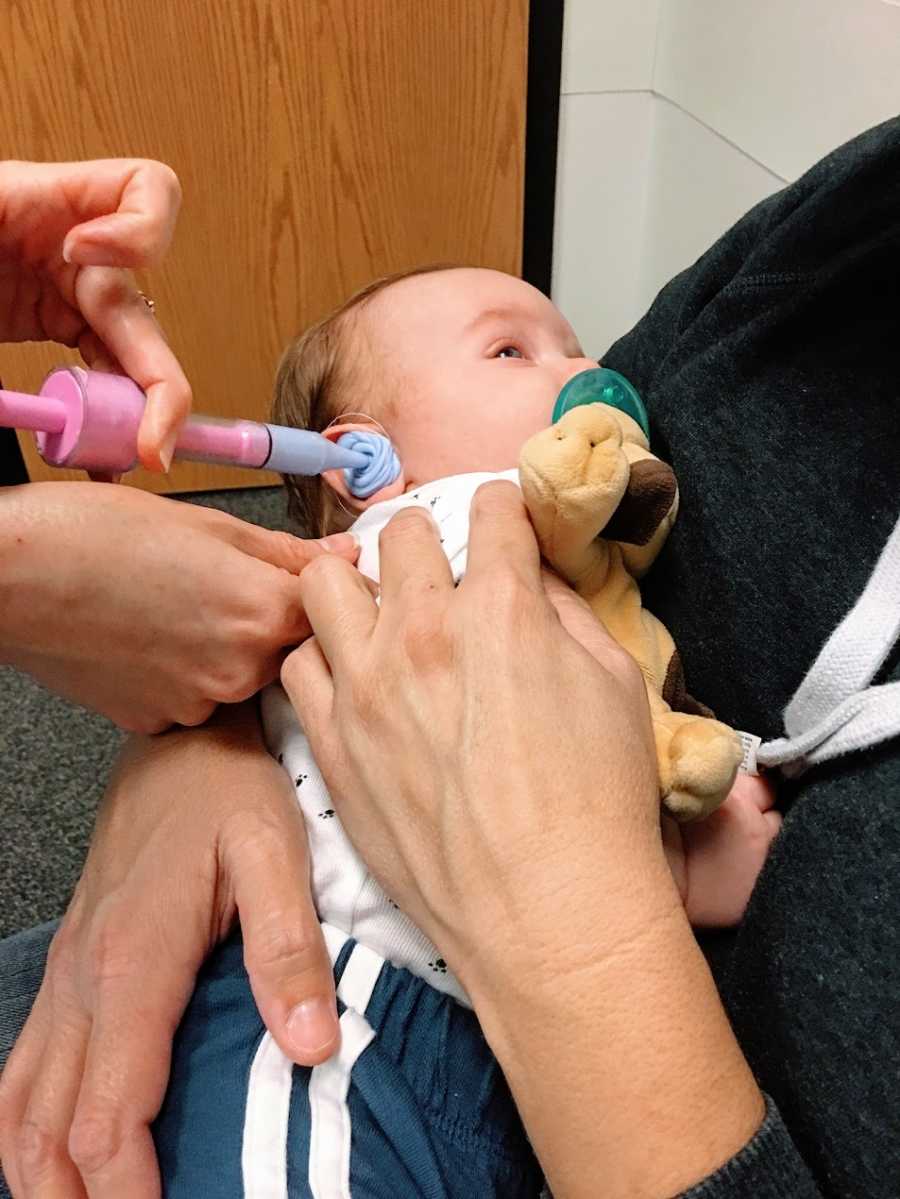
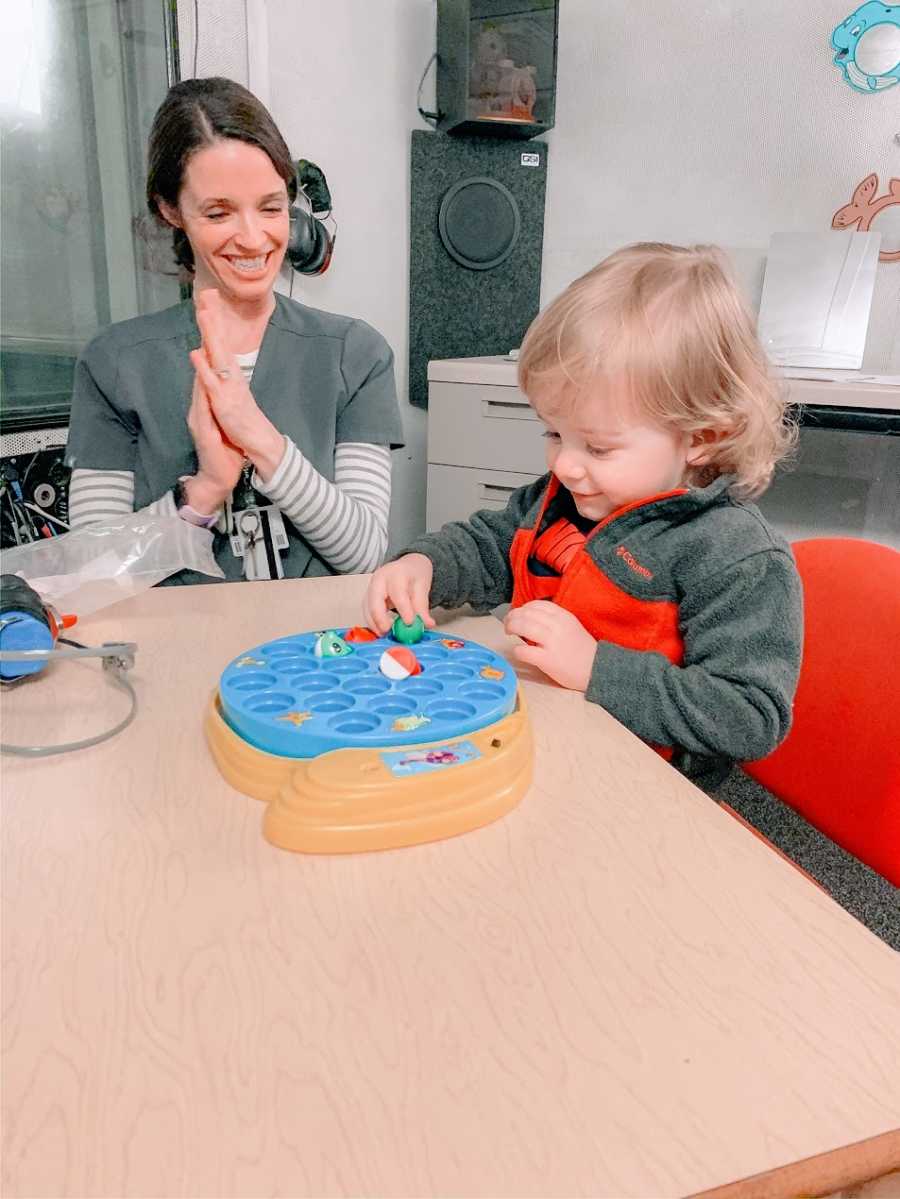
A couple of weeks later, Sawyer was fitted with his first hearing aids at just two months old. Our hearts were heavy, yet we were hopeful he would avoid speech delays. By five months, he was in speech therapy and adapting beautifully. His therapist often marveled at how intelligent he was for his age, noting he likely wouldn’t have needed therapy if it weren’t for his hearing loss.
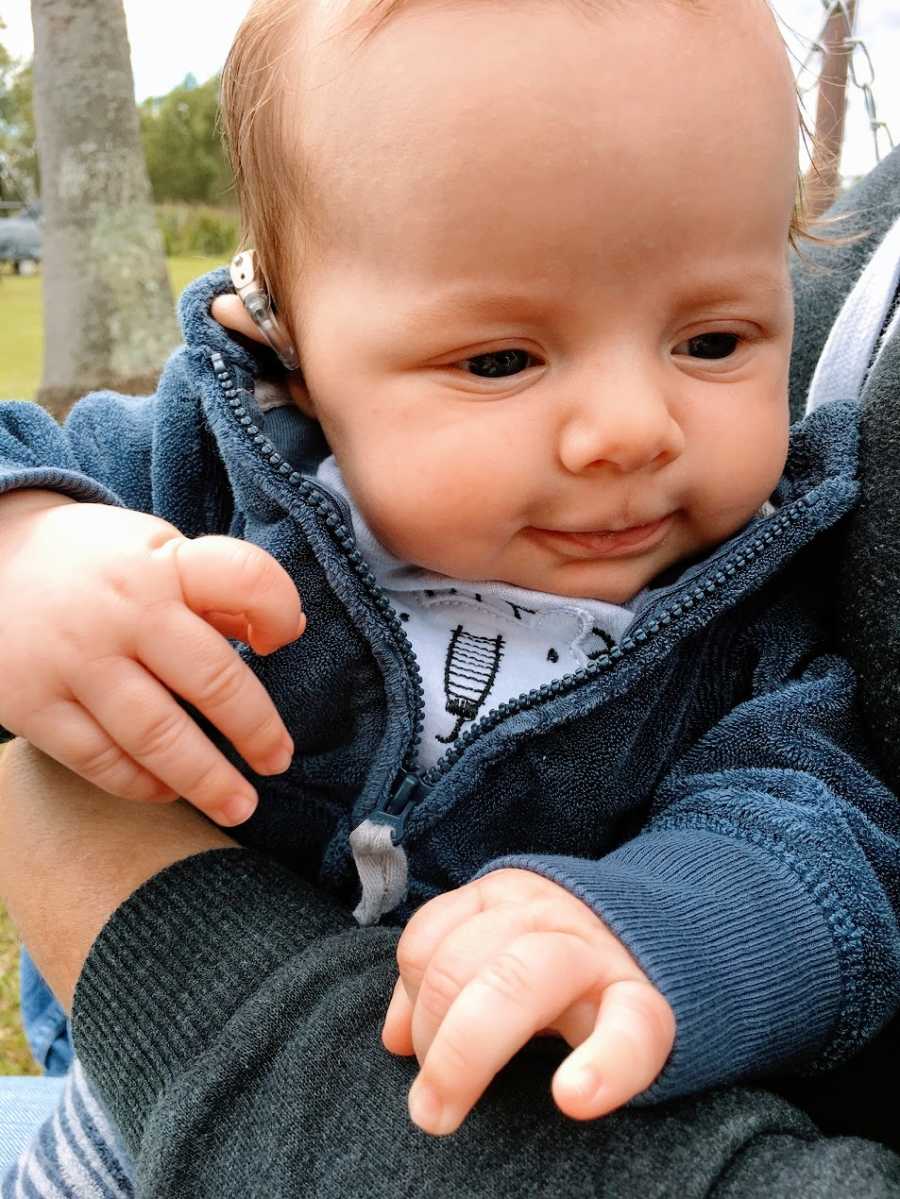
Hearing him begin to speak felt like we were finally doing something right. Every milestone—the first time he repeated a sound, every small word—was a triumph. I reported each session’s success to family, and even on difficult days, his therapist reassured me that he was progressing. Those first words were especially poignant because there had been a time we didn’t know if we would ever hear them.
We closely monitored his development, connected with early intervention providers, and leaned on the Deaf and hearing-impaired community. The outpouring of support from families, organizations, and parent groups was overwhelming and heartening. I even started a blog to raise awareness, initially about hearing loss, but it would later encompass so much more.
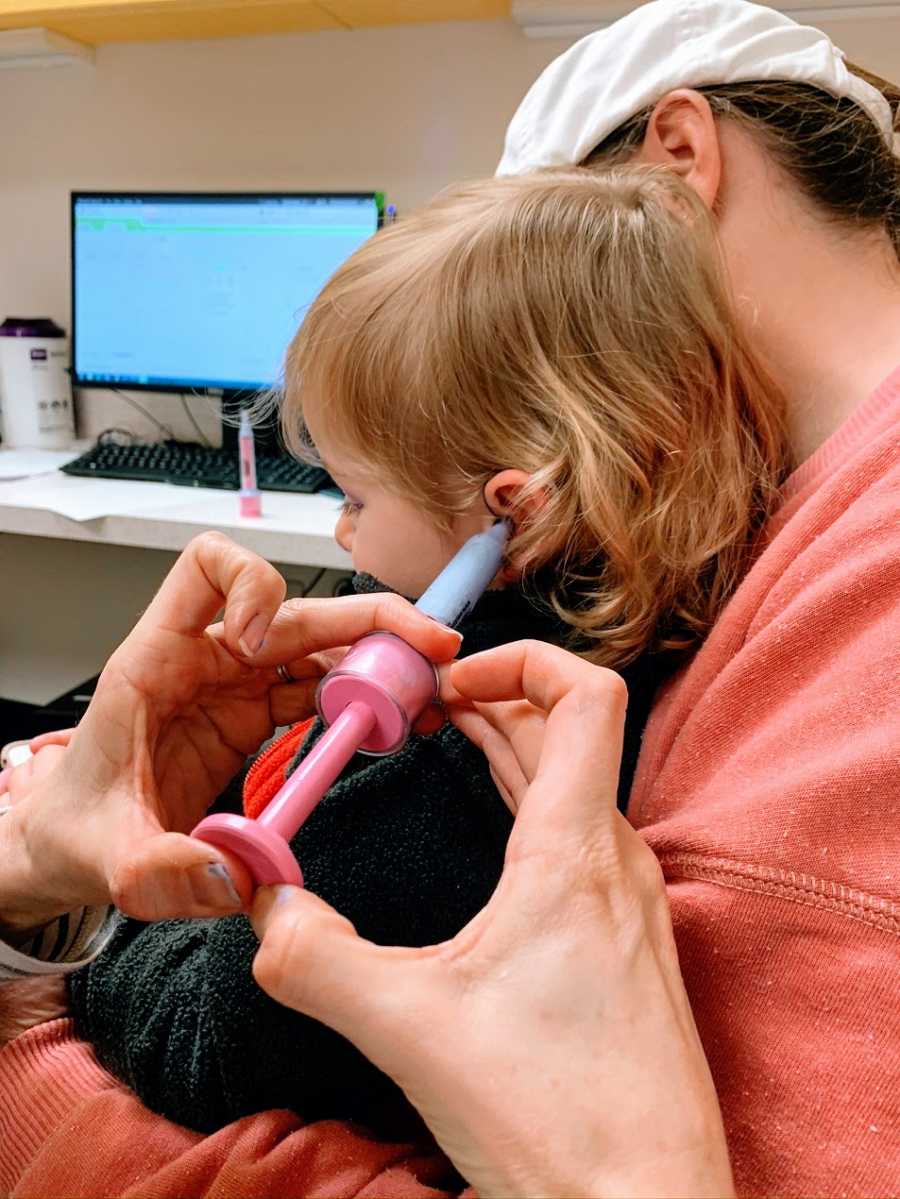
Life with a hearing-impaired infant was chaotic at first. Every two weeks, we had to take Sawyer to the audiologist for new molds as his ears grew. He frequently pulled his hearing aids out or dismantled them entirely, leaving us scrambling and sometimes frustrated. Once, my husband panicked while at work, frantically searching for a tiny piece of his hearing aid, only to find it while I was on the phone with him. Eventually, pilot caps—hats that button under his chin—brought some relief, though even then, Sawyer learned clever ways to remove them.
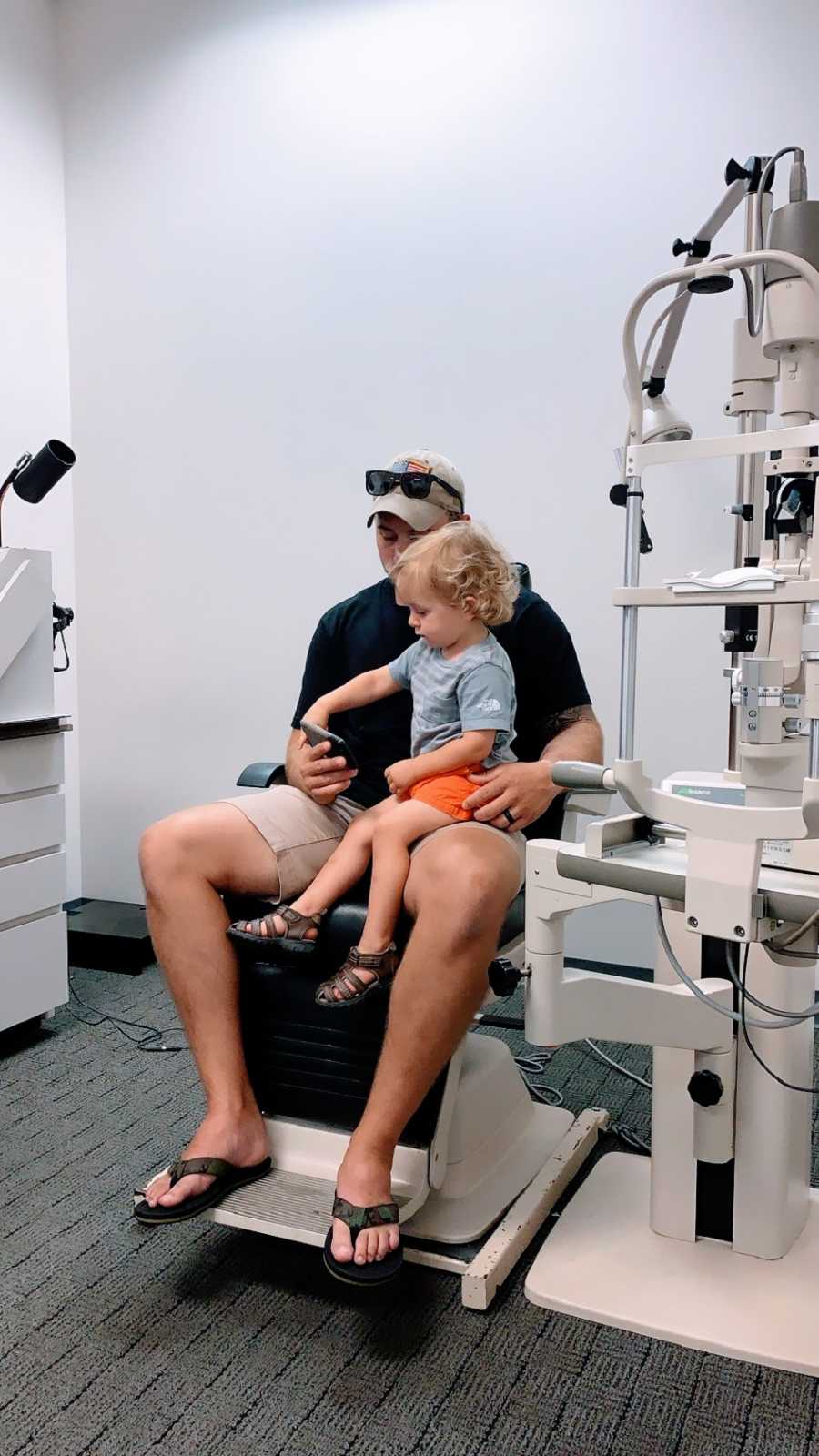
Because of his hearing loss, Sawyer’s ENT recommended a full medical workup to ensure nothing else was involved. CT scans, physical exams, EKGs—all eventually cleared. When he was nearly a year and a half old, we were finally able to pursue genetic testing, hoping for clarity and a sense of stability. Sawyer, weary of doctors and pokes, endured it all with remarkable resilience.
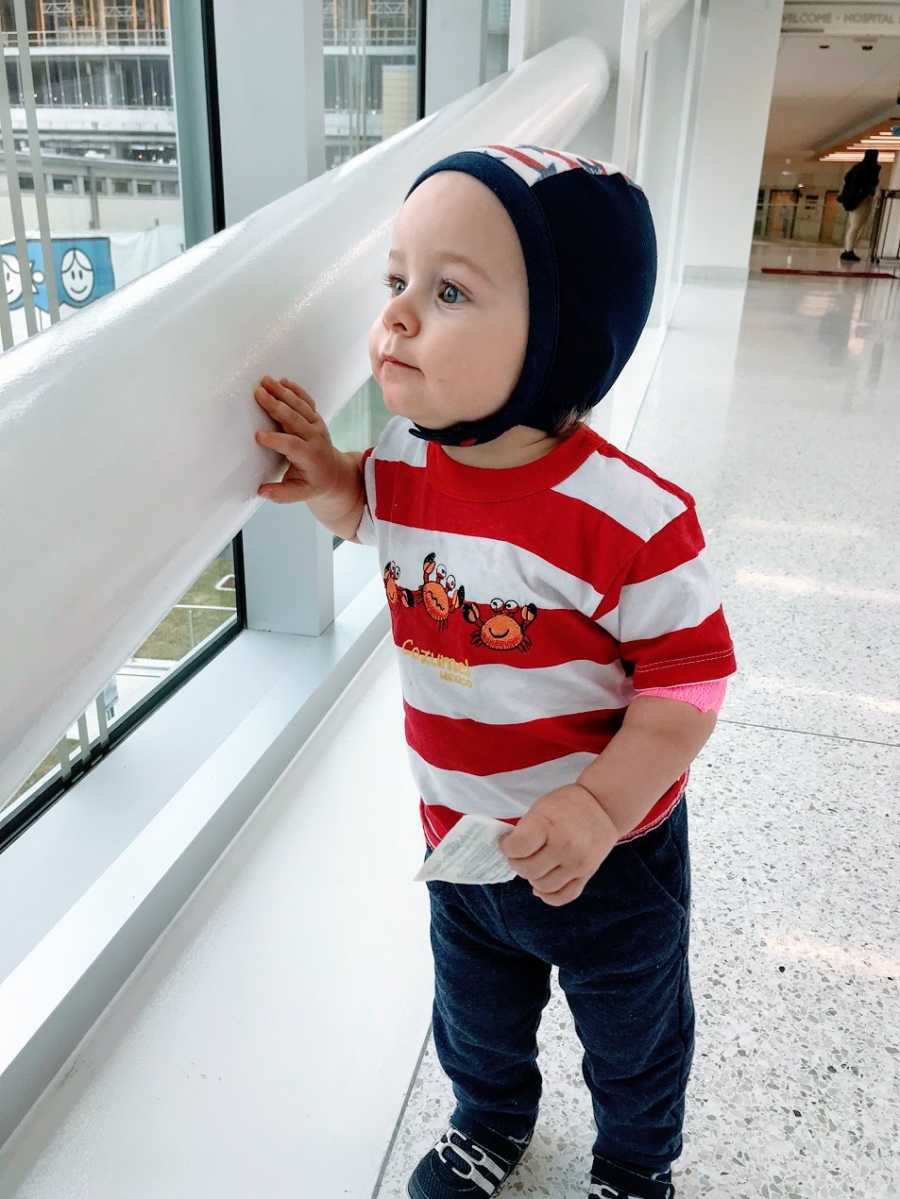
The call from the genetic counselor came when I was at the gym. Children’s Hospital flashed across my phone, and I ran out mid-class, heart pounding. I could barely process her words: Sawyer has Usher Syndrome—a condition causing hearing loss from birth and vision loss beginning in adolescence. I remember hearing only that he would lose his vision. Tears blurred the world, and though I made it home safely, I sat there, shaking and sobbing with my husband, the first time I’d ever seen him cry.
Usher Syndrome is autosomal recessive, meaning both my husband and I passed down the gene. Each pregnancy carries a 25% chance of a child having the syndrome. Sawyer has type 2a, and his vision loss stems from retinitis pigmentosa, a progressive retinal degeneration. We shared the news with family, who cried with us but remained optimistic, full of faith in Sawyer’s ability to overcome challenges.
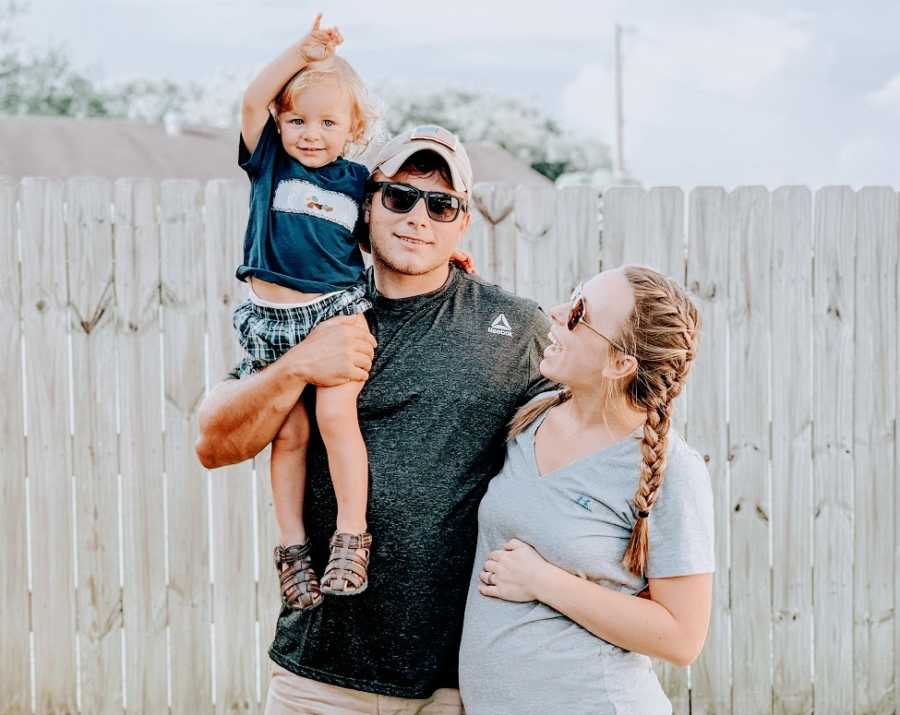
I connected with other families affected by Usher Syndrome, finding hope in seeing older children thriving. Knowing it wouldn’t hold Sawyer back in life was a revelation, and it inspired me to offer the same support to others, just as I had received.
Before learning of Sawyer’s diagnosis, we were trying for a second child. Soon, we discovered we were already pregnant with a daughter. Excitement mingled with fear, given the genetic risks: a 25% chance she might have Usher Syndrome, 50% chance of being a carrier. Still, witnessing Sawyer’s resilience gave us confidence that we could navigate anything together.

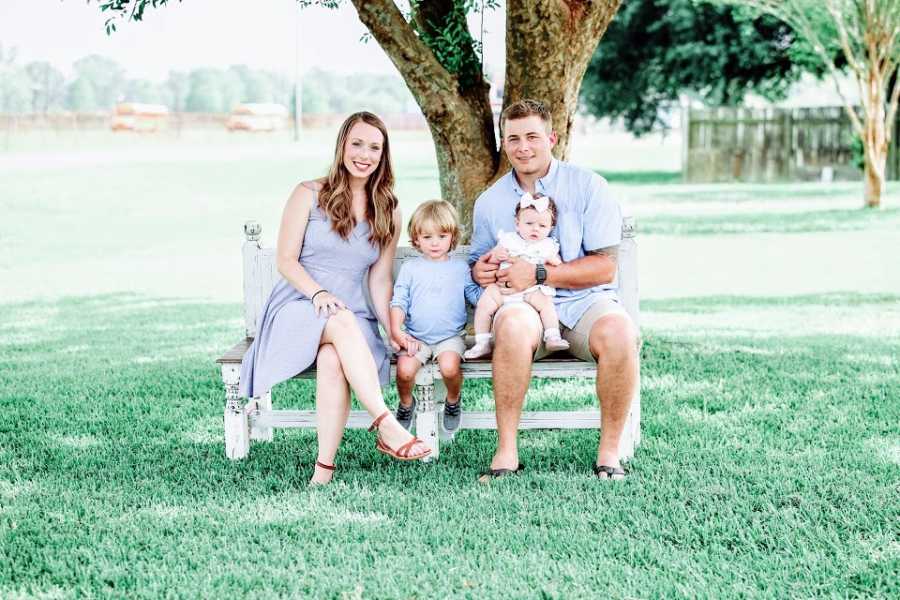
A dream one night gifted us her name: Olivia, meaning “olive tree,” symbolizing peace. From that moment, serenity filled the remainder of the pregnancy. Olivia arrived healthy, passed her newborn hearing screening, and later an ABR test. Genetic testing confirmed she is a carrier but does not have Usher Syndrome herself.
Today, Sawyer is thriving. He tells us when his hearing aid battery is dead, speaks clearly thanks to speech therapy, and is about to turn four. He’ll start soccer this fall, and we marvel at his intelligence, politeness, and resilience. He reads lips when needed and knows when he’s missing parts of the world without his aids. Watching him overcome obstacles fills us with awe.
This journey has taught me an undeniable truth: children are resilient. Sawyer is not broken, he is not missing anything—he is perfect as he is. I once thought deafblindness meant limitations, but watching Sawyer proves how capable he truly is. He will achieve whatever he sets his mind to.
“Although the world is full of suffering, it is full also of the overcoming of it.” – Helen Keller