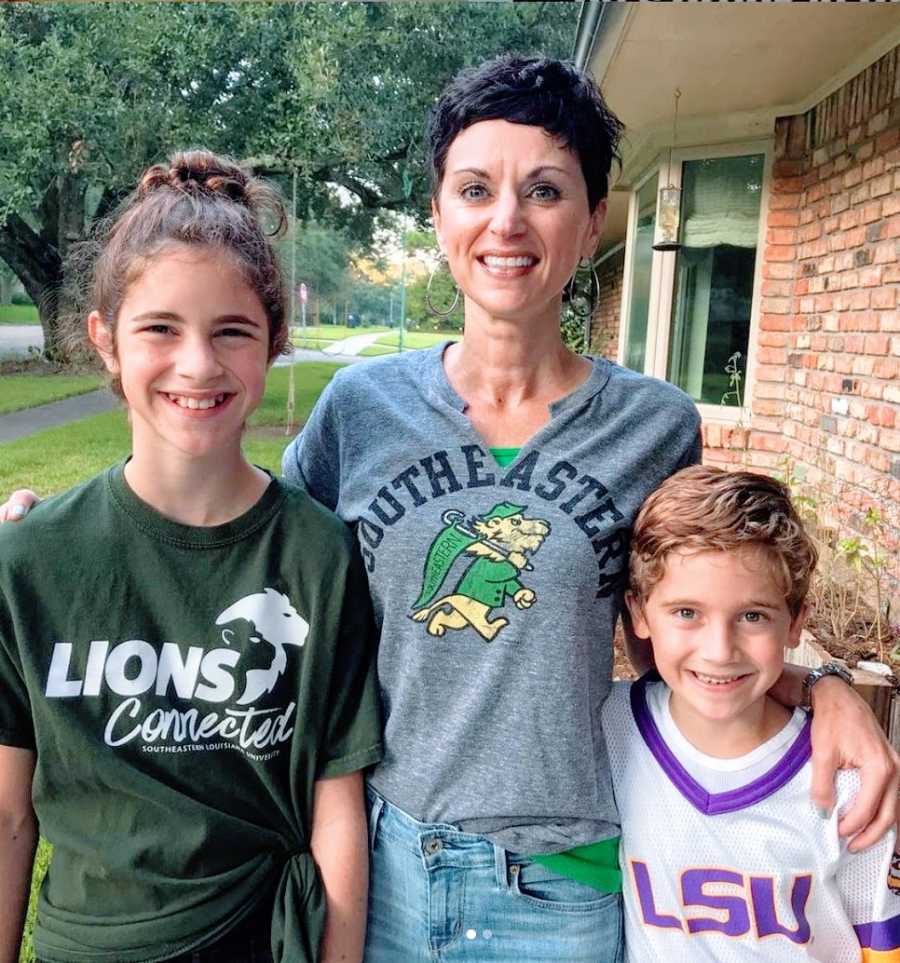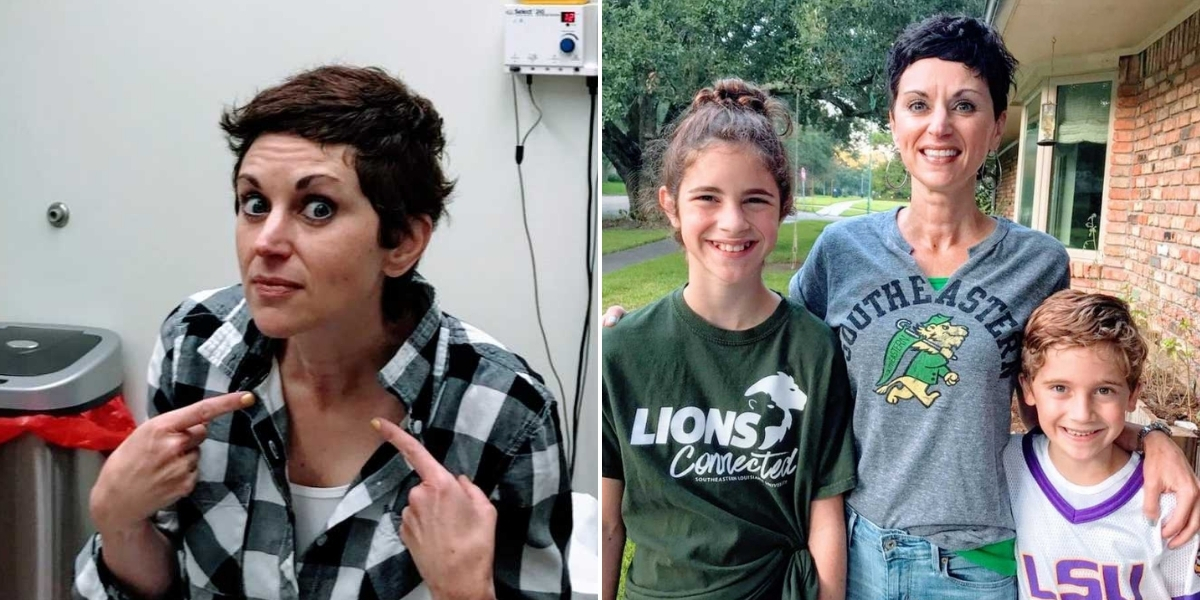
“What’s ‘lor-aze-pum’?” my daughter asked as I was pulling away from the pharmacy drive-up window. I froze for a moment, wondering if I could—or should—talk about what was in the prescription bag with my kids. Up until now, I’ve been fully transparent with them. I want them to see what actually happens behind the scenes in real life—not just the polished exterior we often show the world. I don’t want them to grow up thinking that because something is scary, medical, or personal, it’s somehow abnormal or that they are different from anyone else.
Most of the time, if my kids ask me something, I just tell them. Why keep secrets? Why make life’s realities taboo? I remember when my son was very little—he screamed across a beach condo we were staying in with my dad, “Mooommyyyy! Mommy! What is mommy pulling out of her butt?” He was tiny, but I still told him the truth. Years later, when he had questions about periods, he made the connection. That’s just life. Our bodies, our fears, our experiences—they’re all real, and they shouldn’t be forbidden topics.
So why was I hesitating now?
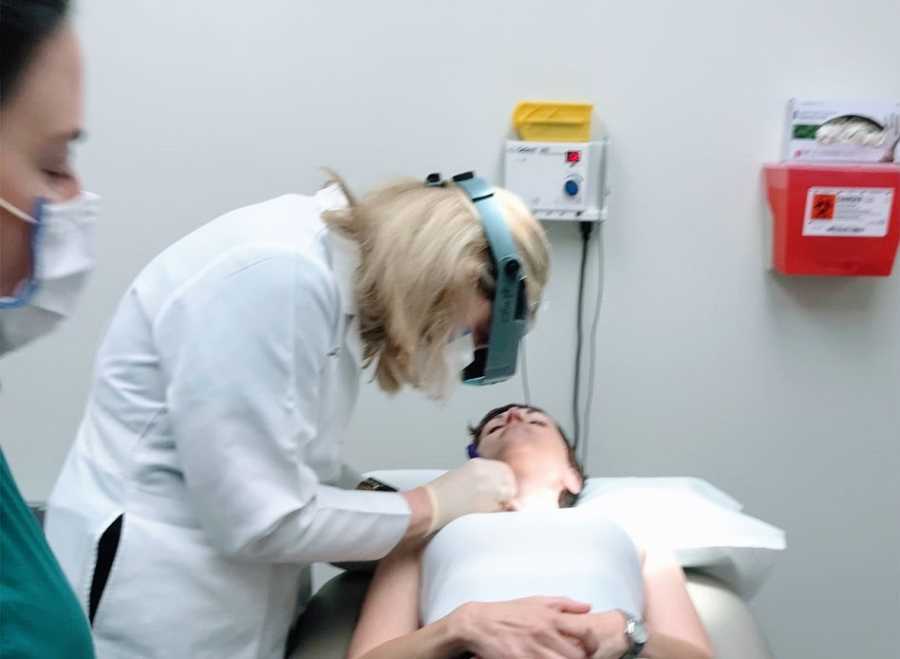
As we drove out of the parking lot, I took a deep breath and decided to tell them the truth. I told them I had to have a procedure to surgically remove a mole along with a large section of tissue from my neck. I admitted that I was scared—really scared. I reminded them of how squeamish I’ve become—we’re talking fainting at the sight of my daughter’s nosebleed—and that I knew I wouldn’t handle the procedure well without a little help.
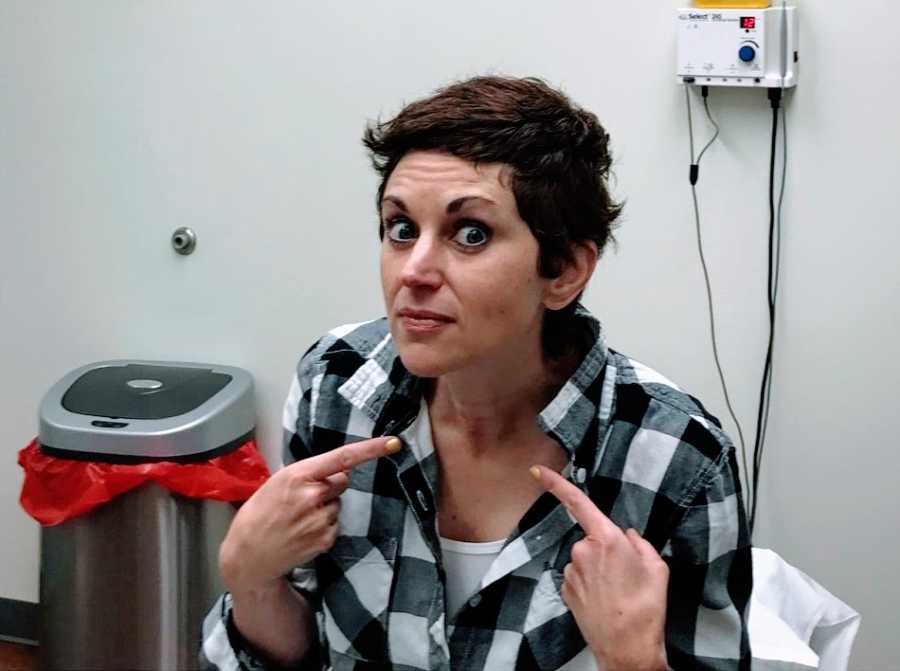
“I asked my doctor for help,” I said. “I told her I was really scared.”
I told them plainly: Mommy is scared. Forty-six-year-old mommy is scared, and she asked her doctor for help.
“It was a little awkward at first,” I explained, “but my doctor was really supportive. The medicine in this bag will help me feel calmer so I’m not so scared when I go in for the procedure.”
And do you know what happened?
Nothing dramatic. Well, something did happen—it wasn’t traumatic or scary, though. My kids listened. They understood. That was it. And then, as if nothing heavy had just been shared, we moved on to a completely different conversation: whether our souls can see other souls after we die. Will there be talking and laughing with other souls? Will it be like Earth 2.0, only without bodies?
Asking for help isn’t always easy. For some people, extreme independence is even a response to past trauma. But humans are not meant to exist entirely alone. We are hardwired to connect, to need each other, to both give and receive help.
Relying on others doesn’t just mean needing someone to help you lift a heavy couch or drive you to an appointment. It’s about the real, human connection that happens when we allow ourselves to lean on one another. Asking for help doesn’t make us weak or overly dependent—it’s a sign of courage. Vulnerability isn’t a flaw; it’s a strength. And in my experience, the most resilient, strong, and downright badass people I know are the ones who allow themselves to be vulnerable.
I know asking for help can feel awkward or uncomfortable. I get it. But that’s exactly why it’s so important to show my children that it’s okay. Even when it feels scary or strange, it’s okay to reach out and ask for support. And maybe just as important, when that support arrives—sometimes in the simple form of a prescription bag with a single pill inside—we need to be willing to accept it.