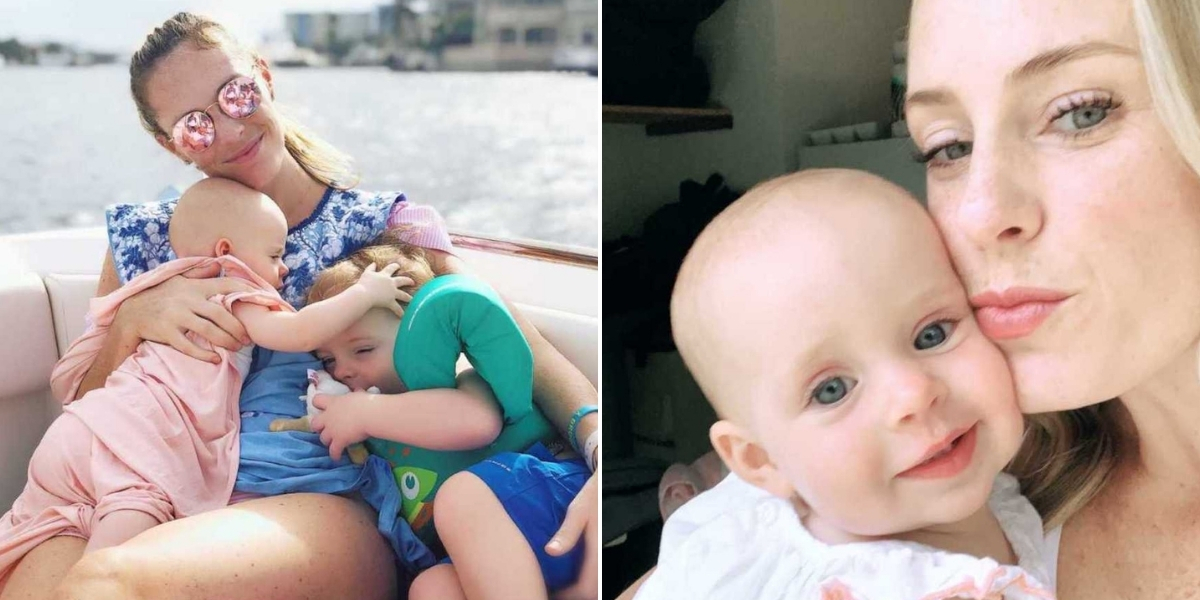
It honestly feels like a lifetime ago. And yet, postpartum depression still lives quietly in my everyday moments—small reminders of the darker days that continue to exist around me. The sign on the highway. The bracelet I wear every single day. The resentment that surfaces and resurfaces without warning. The immense sadness and guilt that can feel overwhelming, even now.
I have always been self-sufficient—maybe to a fault. Caring for others is my nature. I am the oldest child, the oldest of many cousins, a wife, a mama, and a NICU nurse. Even my own mother has always said I was “the one she never worried about.” Sometimes I wonder now if that became a self-fulfilling prophecy.
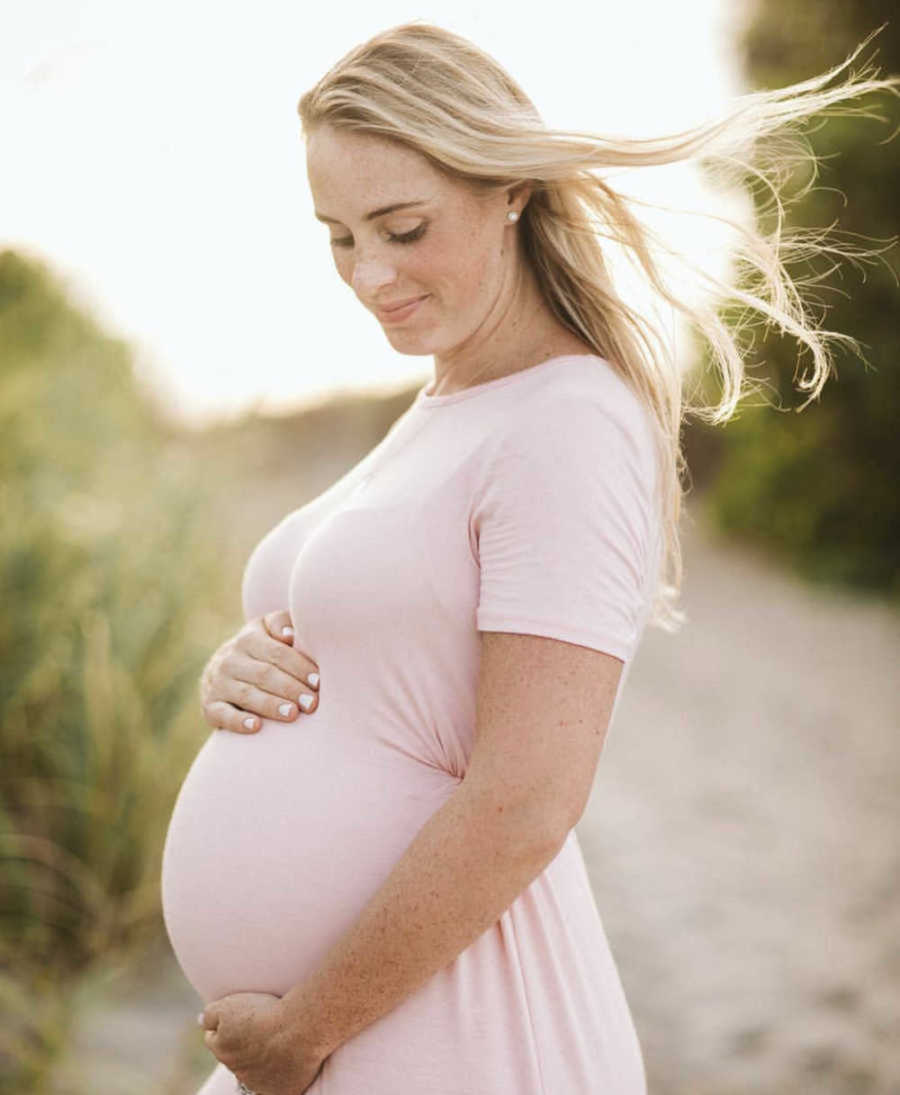
The symptoms began during my pregnancy with my first child, Finn. It was a difficult pregnancy from the start. Looking back, I believe I had undiagnosed gestational diabetes. Finn weighed over ten pounds at birth, and I gained a steady seventy-five pounds throughout the pregnancy. I was swollen, exhausted, working full-time twelve-hour shifts as an RN in the NICU, and trying to sleep through the loud nights of Wrigleyville as the Cubs played in the World Series. I was physically and mentally depleted, desperately needing support from my loved ones—support I truly believed I had, right up until the day I went into labor.
Then everything shifted.
On my due date, my nine-year-old cousin was diagnosed with rhabdomyosarcoma, a soft tissue cancer of his facial sinus cavity. To say our family was devastated is an understatement. We are incredibly close-knit, and everyone rallied around my aunt, uncle, and their family in ways I will never forget.
But somehow, I felt… forgotten.
Three days later, Finn was born—ten pounds, one ounce of pure love—and was immediately admitted to the NICU for meconium aspiration and low blood sugars. He spent his first week of life there. My family split their time between visiting my cousin during his first round of chemotherapy at the adjoining Children’s Hospital—ironically, the same hospital where I worked—and coming to see Finn in the NICU.
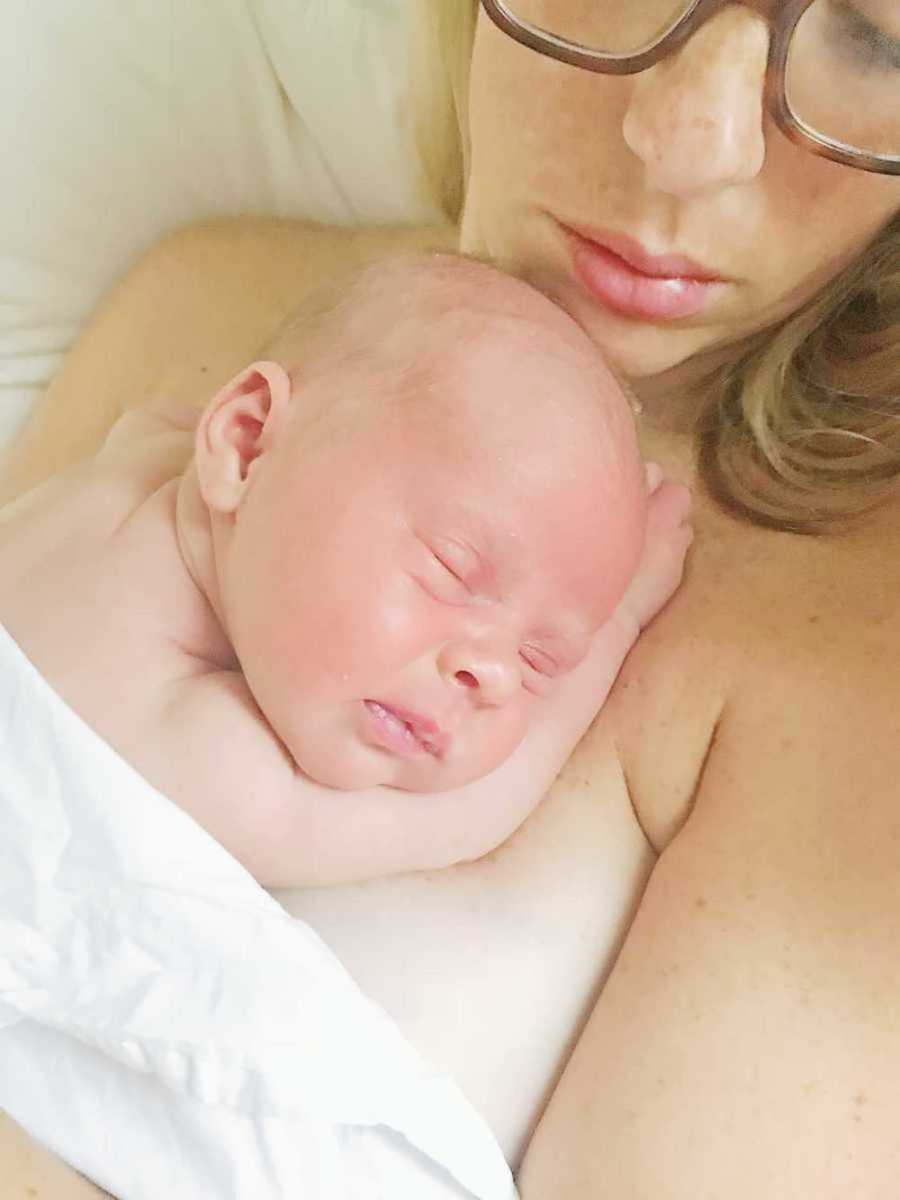
During that time, I slipped into postpartum hypomania. I barely slept. I felt wired, alert, switching shifts with my husband but never feeling truly exhausted. I convinced myself I had everything under control. The NICU was familiar territory for me as a nurse, but emotionally I felt disconnected, almost out of body—like Finn was a patient, not my baby.
Then… BOOM. We were home.
Finn had a tongue tie. My nipples were raw and bleeding. When I tried to latch him, the pain was so unbearable that I screamed, “GET HIM AWAY FROM ME!” and pushed him toward my husband’s lap. In that moment, resentment flooded me. I resented myself. I resented Finn. I resented my husband for not instantly feeling bonded. I resented my family for supporting my aunt during an unimaginable time. I resented my friends without children.
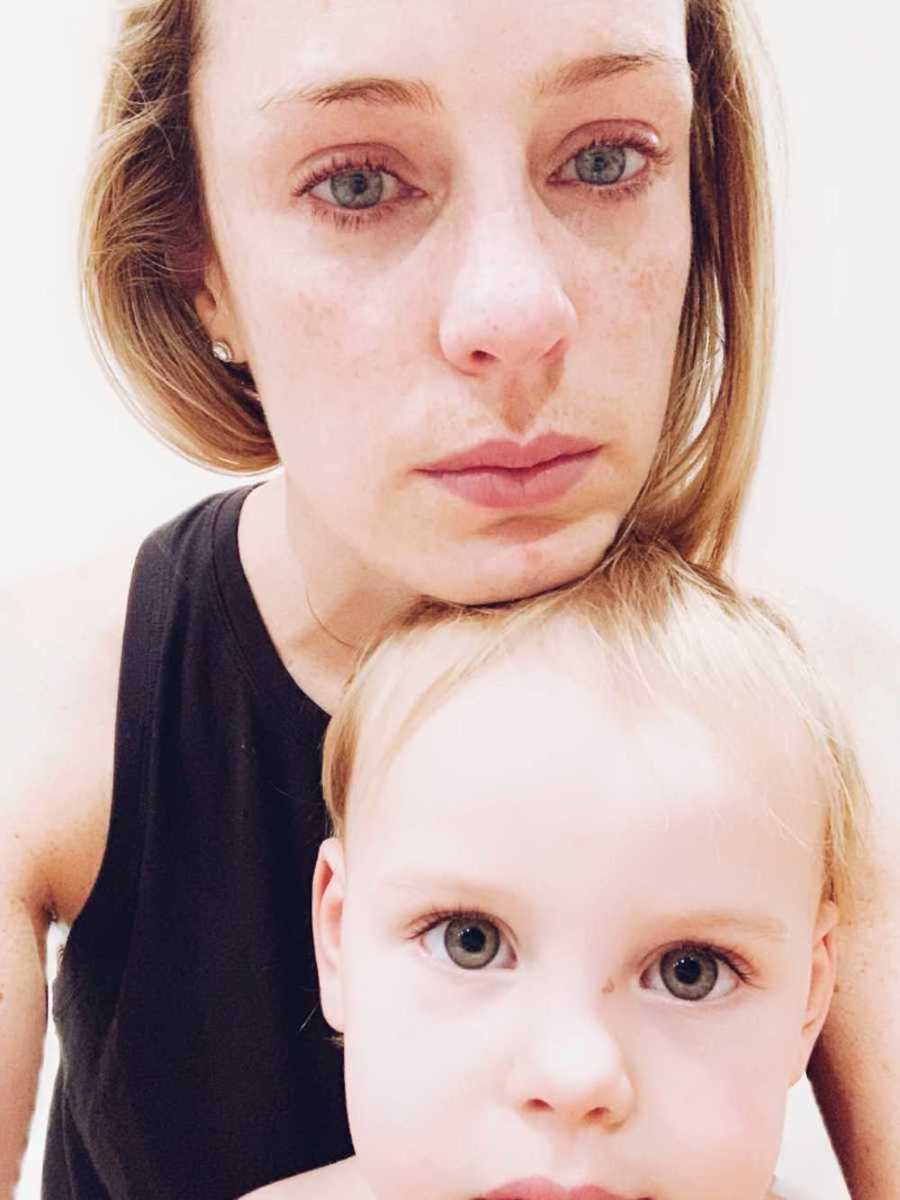
And I could not say any of it out loud.
I told myself:
You don’t have cancer—you can get over it.
You chose to have a baby—many people can’t.
This is supposed to be the happiest time of your life.
You have everything you’ve ever wanted—why aren’t you happy?
Snap out of it.
I believed this season was supposed to be joyful. It wasn’t. No one checked in on me, because on the outside, I looked fine. I always had. I was “the one they never worried about.” The support system I thought I had quietly crumbled beneath me. I felt guilty asking for help while witnessing the deep suffering of my family. I didn’t think my pain deserved space.
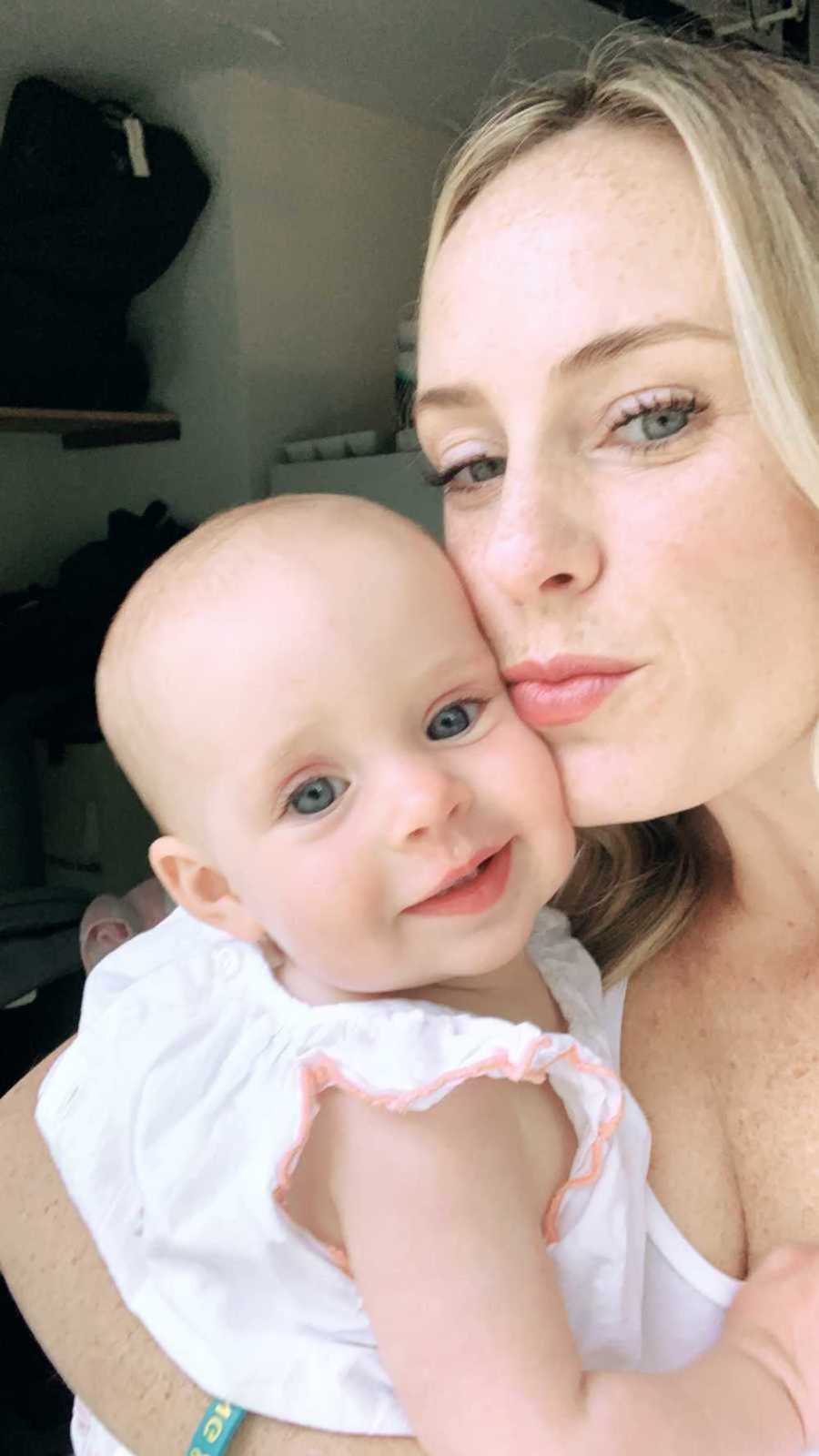
When I returned to work, my childcare—my mom—fell through. She needed to be available for my aunt, to help however she could. I understood. But it meant I had to cut back at work and eventually resign altogether. That job was the one thing that got me out of the house, using my brain, feeling normal. Without it, I sank further.
Things escalated when I was only working three days a month. My husband felt helpless, unsure how to handle my mood swings, my chronic irritability, my exhaustion. Then I got my period—and suddenly, relief. My hormones stabilized. Finn slept well. I felt better. Optimistic. Why not have another baby?
I got pregnant on the first try. Finn was seven months old.
We were ready to tell my family—when the phone rang. My cousin’s cancer had spread. Chemotherapy wasn’t working.
I thought, I can’t do this again without them. But I still couldn’t ask for help. I wasn’t worthy.
I shut down completely. I didn’t ask about my cousin. I couldn’t support my family. I was frozen in depression. The two most joyous moments of my life—becoming a mother and growing our family—were overshadowed. I understood why my family’s focus was elsewhere. But I needed support, and it simply wasn’t available.
I sank deeper into numbness. Cancer was tangible—labs, imaging, visible suffering. My postpartum depression was invisible. No one could see it, measure it, or validate it. I couldn’t find the courage to voice how deep my suffering ran.
I wasn’t worthy.
My cousin passed away a month later. The community came together in the most beautiful way to support my aunt and her family. And there I was—hollow, ghostlike. I told myself again: You have your child. They don’t. Their baby is gone forever. Snap out of it.
But resentment still lived inside me. How could no one see that I was suffering too?
Then my daughter arrived. We hadn’t found out the sex beforehand. When the doctor said, “It’s a girl,” terror washed over me. I thought, I don’t know how to love a girl. What if she turns out like me?
And the cycle began again. Hypomania. Then depression. No bonding. Silence. Crying all day. Crying in the shower. Emotional outbursts. Exhaustion paired with insomnia. Irritability. Pulling away from friends. Every action screaming for help, yet no words spoken. Why is no one hugging me? Why is no one telling me everything will be okay?
I am not worthy.
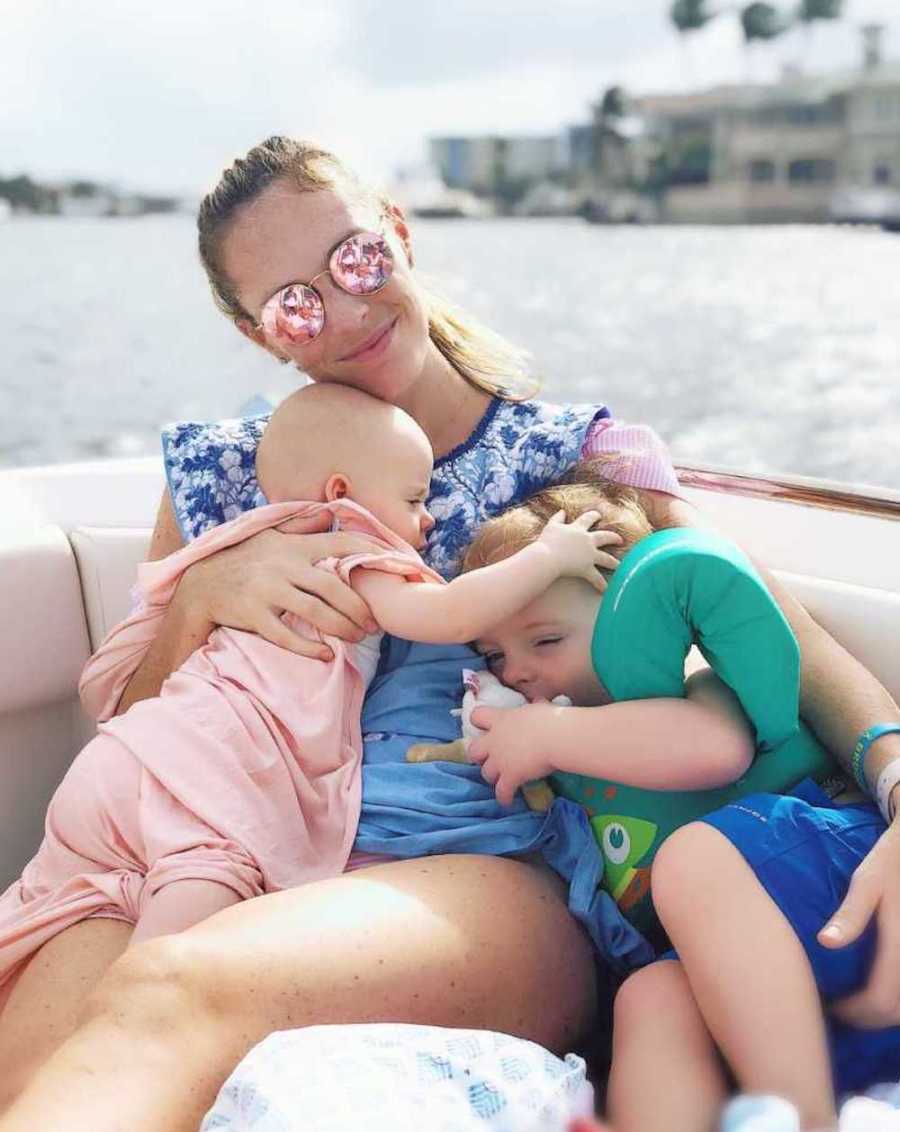
The depression settled over me like a heavy down comforter—just enough weight to keep me from moving. Every day felt like a battle. I forced myself out of the house, only to be overwhelmed by social anxiety and rush back home. I couldn’t look my parents in the eye. No one asked how I was doing. After all, I was still “the one they never worried about.”
At seven months postpartum, I got my period again—and once more, the fog lifted slightly. I wasn’t fully better, but I could see clearly enough to know I needed help. I called my OB and started antidepressants that same day.
I am worthy.
Some may struggle to understand my reactions during such an incredibly painful time for my entire family. I share this story for the person who feels their suffering isn’t “bad enough” to speak aloud. For the one afraid of burdening others.
You are worthy.
I had an enormous support system. I had never struggled with mental illness before. But I learned that postpartum depression does not discriminate. Affluence, love, healthy children, strong relationships—none of it makes you immune. PPD is ruthless. It whispers that your pain doesn’t matter. It makes you grieve the person you once were. It convinces you that your emotions are worthless.
PPD is now a part of me—but I refuse to let it convince me that I don’t matter.
You matter, mama.
Over time, the resentment I carried began to lift. I realized I resented those I expected to save me. But the truth is, the only person who could pull me out of the darkness was me. I had to take the first step.
And that step was asking for help.
It’s the hardest thing you’ll ever do—but you can do it. I believe in you.
Today, I am forever changed. I will never be the person I was before, and I am learning to make peace with that. Healing is slow. It doesn’t happen overnight. But more and more each day, I know this truth:
I am worthy.
And mama—you are worthy, too.